
Introduction
Most family business owners spend decades building something meaningful. They know their industry, their customers, and their profit margins. What they often don't know is how to hand it all over without creating chaos.
Family business succession planning is the framework for transferring leadership and ownership within the family while preserving what makes the business work. It's not just estate planning, and it's not just picking a favorite child. It's a structured process that addresses ownership transfer, leadership development, tax strategy, and family governance — often over multiple years.
The stakes are real. Without a plan, the transition becomes a crisis. Employees wonder who's in charge. Customers question stability. Family members argue about roles and equity. The business that survived recessions and market shifts can fracture during a leadership vacuum. For context on the broader framework that applies to any business transition, see Business Succession Planning: Protecting Your Company's Future.
The good news: families that start early and approach succession as a business decision — not just a family matter — typically navigate the transition successfully. The framework isn't complicated. The execution requires discipline, honest conversation, and a willingness to separate what's good for the family from what's good for the business. Sometimes those align. Sometimes they don't.
Here's what that actually means in practical terms, and how to build a succession plan that works for your family and your business.
Understanding the Problem
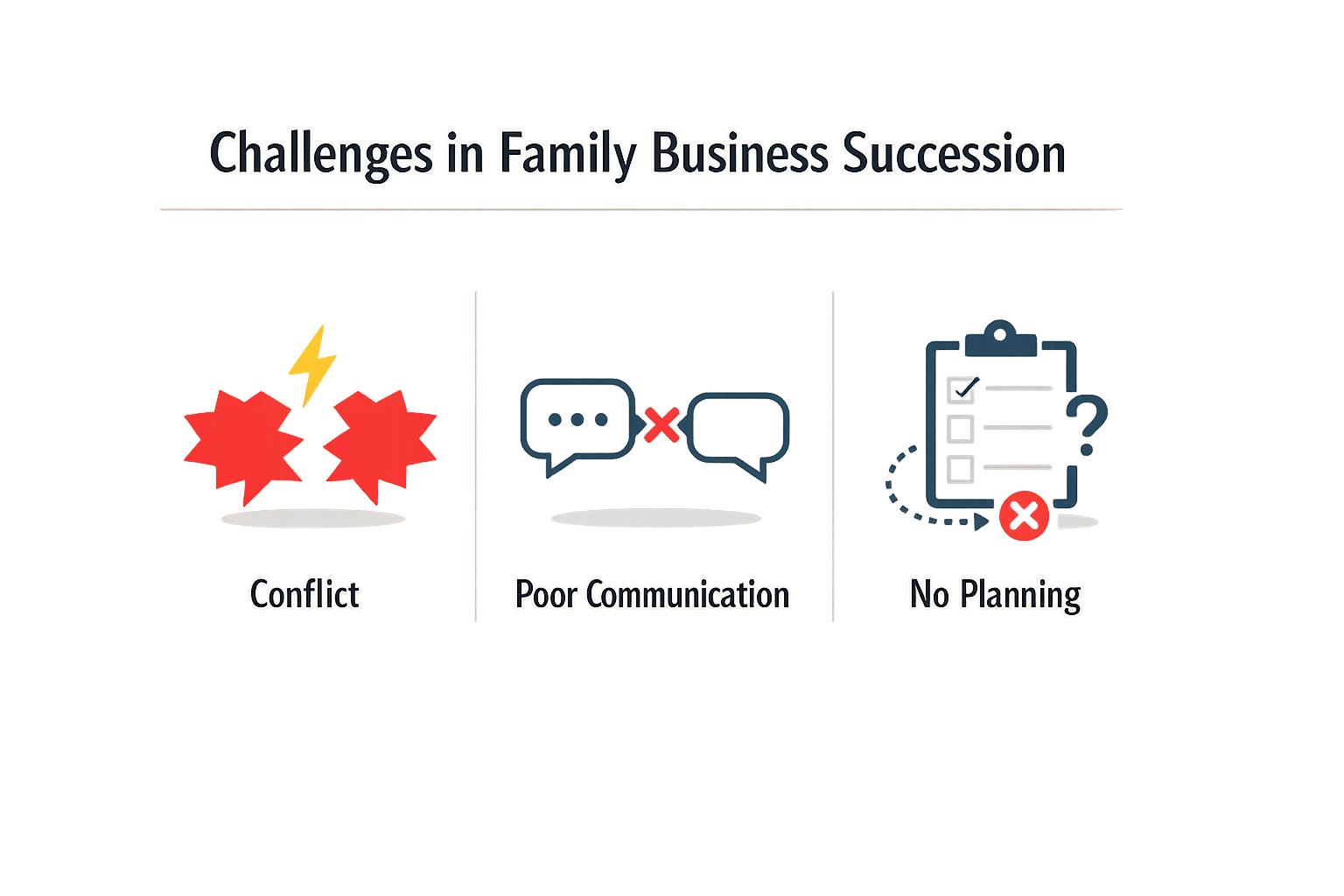
Most family businesses fail to survive the transition to the next generation. The statistics are consistent — somewhere between two-thirds and three-quarters of family-owned companies don't make it past the founder. The problem isn't usually the business itself. The problem is that succession planning feels like planning your own funeral, so most owners put it off until it's too late.
The emotional complexity of choosing a successor inside a family creates paralysis. Parents worry about fairness among siblings. Adult children worry about disappointing their parents or stepping on each other's toes. Meanwhile, the business keeps running, and the founder keeps aging, and nobody wants to be the one to start the uncomfortable conversation.
The Tax and Legal Maze
The technical challenges layer on top of the emotional ones. Tax implications alone can derail a transition if they're not addressed early. When ownership transfers — whether through sale, gift, or inheritance — the IRS has specific rules about valuation, timing, and structure. Getting those rules wrong can trigger unexpected tax bills that force a sale of the business just to pay the government.
Trust structures and estate planning add another layer of complexity. The application of tax code provisions highlights the importance of understanding tax implications in family business succession planning. A poorly structured transfer can create unintended consequences that take years to unwind.
Operational Continuity During Transition
The business doesn't pause while the family figures out succession. Customers still need service. Employees still need direction. Vendors still need payment. A visible leadership vacuum creates uncertainty that competitors can exploit and key employees can interpret as their cue to leave.
The framework for maintaining operational stability during a transition requires identifying who makes which decisions at each stage of the handoff. Without clear authority, even routine business decisions can stall while family members debate who has the final say. This ambiguity costs money and momentum.
When There's No Clear Successor
Not every family has a next-generation member who wants to run the business. Sometimes the kids have different career paths. Sometimes they lack the skills or temperament for the role. Sometimes they're interested but not ready. Forcing a succession that doesn't fit creates resentment and often leads to business failure within a few years.
The honest answer is that keeping it in the family only works when someone in the family is both willing and capable. When that's not the case, the succession plan needs to account for outside leadership, partial sales, or full transitions to non-family buyers. For more on structuring these alternatives, see Business Succession Planning: Protecting Your Company's Future.
Steps to Effective Succession Planning
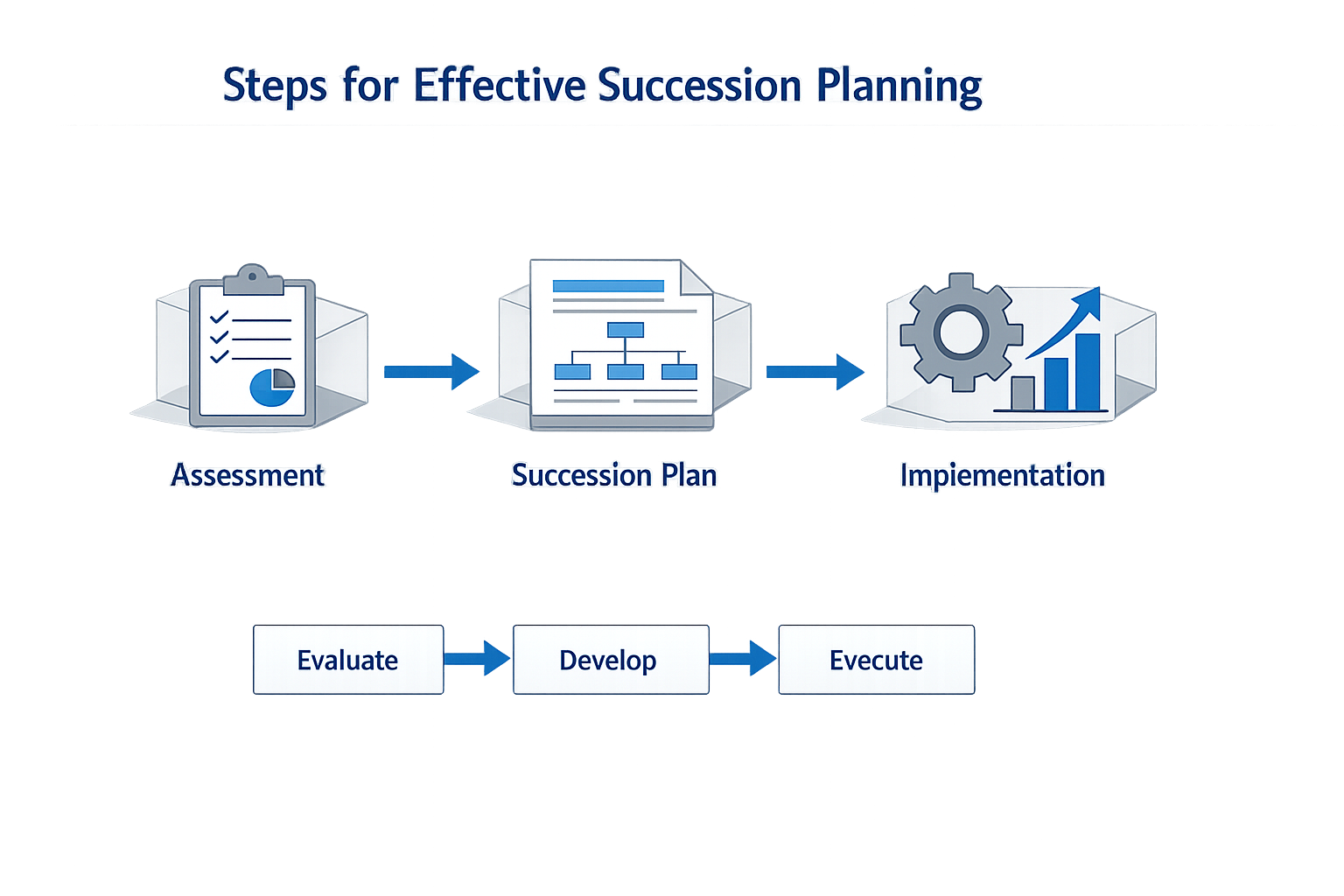
Most families approach succession planning the same way they approach cleaning out the garage — they know it needs to happen, but they keep putting it off until something forces their hand. The difference is that waiting too long on succession planning can cost the family business everything they've built. Here's a framework for getting it done while you still have time to do it right.
Step 1: Start the Conversation Early
The hardest part of family business succession planning isn't the legal documents or the tax strategies — it's getting everyone in the same room to talk about it. Start these conversations years before you plan to transition, not months. The goal is getting in the right range for timing, not picking an exact retirement date on day one.
Step 1
Identify all stakeholders
Bring together everyone with a stake in the outcome — current owners, potential successors, key employees who aren't family, and spouses whose financial futures depend on the business. Each group has different concerns, and you need to hear all of them before making decisions.
Step 2
Define what success looks like
Success means different things to different families. For some, it's keeping the business in the family for another generation. For others, it's maximizing sale value so everyone can retire comfortably. For many, it's somewhere in between — transferring operational control while maintaining some ownership stake. Get clear on what you're actually trying to accomplish.
Step 2: Assess Your Successor Options
Not every family member wants to run the business, and not every family member who wants to should. The honest answer is that capability matters more than bloodline when you're talking about the company's survival.
Step 3
Evaluate candidates objectively
Look at leadership skills, industry knowledge, financial acumen, and willingness to commit long-term. If you have multiple potential successors, consider whether they can work together or whether the business needs a single clear leader. If no family member is ready or willing, that's critical information — better to know now than after you've already stepped back.
Some families discover they need a hybrid approach — family ownership with professional management, or a gradual transition where the successor works alongside the current owner for several years. There's no single right answer, but there is a wrong answer: pretending the problem will solve itself.
Step 3: Structure the Ownership Transfer
How you transfer ownership determines the tax bill, the family dynamics, and whether the business has enough cash flow to survive the transition. The framework here depends on whether you're gifting equity, selling it, or using some combination.
Step 4
Choose your transfer method
Gifting shares works when the current owner doesn't need sale proceeds for retirement and wants to minimize the successor's financial burden. Selling shares — either outright or through an installment sale — works when the owner needs the capital or wants to ensure the successor has real skin in the game. Many families use a staged approach, gifting some equity while selling the rest over time.
Ownership structure matters too. If you're transferring to multiple family members, decide whether everyone gets equal shares or whether active participants get more than passive investors. Unequal distribution can make sense operationally, but it creates family tension if you don't explain the reasoning clearly.
Step 4: Address the Financial Mechanics
Succession planning isn't just about who runs the company — it's about whether the company can afford the transition. The math works like this: if the business needs to buy out a retiring owner, fund life insurance, and pay a new leader's salary all at once, cash flow gets tight fast.
Step 5
Build a funding strategy
Identify where the money comes from to fund the transition. Options include business cash flow, bank financing, seller financing (where the exiting owner holds a note), or life insurance proceeds if the transition is triggered by death. Each approach has different tax implications and different impacts on the business's financial flexibility. For more on protecting business continuity during unexpected transitions, see Business Succession Planning: Protecting Your Company's Future.
A common misconception is that the business's book value determines the transfer price. In reality, fair market value depends on earnings, growth potential, industry multiples, and what a willing buyer would actually pay. Getting a professional valuation prevents family disputes and ensures any sale or gift is structured correctly for tax purposes.
Step 5: Document Everything in Writing
Verbal agreements work great until someone's memory gets fuzzy or circumstances change. Buy-sell agreements, employment contracts, shareholder agreements, and updated estate documents need to be in writing and reviewed by attorneys who specialize in business succession.
Step 6
Create binding agreements
A buy-sell agreement specifies what happens if an owner dies, becomes disabled, wants to retire, or faces divorce. It sets the valuation method, the funding source, and the timeline. Without one, the business can end up in probate, owned by someone's ex-spouse, or caught in a family lawsuit that destroys both the company and the relationships.
These documents aren't one-and-done. Review them every few years, especially after major life events — births, deaths, divorces, or significant changes in business value. What made sense when the company was worth $2 million might not make sense when it's worth $10 million.
Step 6: Plan for the Tax Impact
The IRS doesn't care about your family dynamics — they care about whether you've structured the transfer to minimize their cut or maximize it. Estate taxes, gift taxes, capital gains, and income taxes all come into play depending on how you transfer ownership.
Step 7
Coordinate with tax and legal advisors
Work with professionals who understand business succession, not just general tax preparation. Strategies like grantor retained annuity trusts (GRATs), family limited partnerships, installment sales to intentionally defective grantor trusts (IDGTs), and charitable remainder trusts can significantly reduce the tax bill — but only if structured correctly and well in advance.
Timing matters. Some strategies require years of planning to be effective. Others have annual limits — you can gift a certain amount each year without triggering gift tax, but you can't make up for lost years if you wait too long to start.
Step 7: Communicate the Plan to All Stakeholders
Once you've built the framework, don't keep it secret. Employees need to know the business has a future. Customers and vendors need to know there's continuity. Family members who aren't involved in the business need to understand why decisions were made the way they were.
Step 8
Roll out the succession plan transparently
Share the timeline, the roles, and the reasoning. You don't need to disclose every financial detail, but you do need to give people enough information to understand what's happening and why. Uncertainty breeds rumors, and rumors breed instability.
For informational and educational purposes, this framework provides a starting point — your specific situation will require adjustments based on your industry, your family structure, your business's financial position, and your state's laws. When you're ready to take the next step, talk to a licensed financial professional and an attorney who specializes in business succession.
Tips and Tricks for Success

Succession planning isn't a one-time event — it's a process that unfolds over years and adapts as the business and family evolve. The families that navigate it successfully share a few common practices, most of which revolve around transparency, documentation, and realistic expectations.
Document everything in writing
Verbal agreements fall apart the moment someone's memory differs from someone else's. Written records of who accepted what responsibilities, when fiduciary accounts changed hands, and what the decision-making framework looks like create a shared understanding that survives disagreements. Owners and directors should maintain clear documentation of the acceptance and relinquishment of fiduciary accounts to ensure transparency and accountability. This isn't about mistrust — it's about creating a reference point everyone can return to when questions arise.
Review your plan at least once a year
Businesses change. Family dynamics shift. What made sense three years ago may not reflect today's reality. Set an annual review where the current leadership and successors revisit the succession timeline, reassess who's prepared for what roles, and adjust the plan accordingly. This is also the time to review the investment strategy for fiduciary accounts to determine whether assets should be retained or repositioned — a practice that keeps the business financially aligned with its long-term goals.
Most families find that scheduling this review around the same time each year (tied to fiscal year-end or a recurring family meeting) keeps it from slipping through the cracks.
Establish clear ordering rules for distributions and responsibilities
When assets and decision-making authority shift from one generation to the next, ambiguity creates conflict. Clear ordering rules for distributions — who gets what, when, and under what conditions — help manage the transition of both assets and responsibilities in a way that feels fair and predictable. The same principle applies to leadership responsibilities: define who steps into which role, in what sequence, and what triggers the next phase of the transition.
The goal isn't to eliminate all disagreement — it's to make sure everyone knows the framework before emotions run high.
Separate family roles from business roles
Not every family member is suited for every business role, and that's not a failure — it's a fact. Some successors thrive in operations, others in finance, and some contribute best as shareholders without day-to-day involvement. The healthiest transitions happen when families distinguish between being part of the family and being part of the business leadership team. Define what qualifications are required for key roles, and apply them consistently, even when it means a family member steps back.
This clarity protects relationships. When someone doesn't get a role they wanted, it's easier to accept if the criteria were known upfront and applied fairly.
Bring in outside perspective when needed
Families often get stuck in patterns they can't see from the inside. An outside advisor — whether an attorney, accountant, or business consultant — can surface blind spots, mediate difficult conversations, and offer frameworks that worked for other families in similar situations. This isn't about outsourcing decisions; it's about getting a clearer view of the terrain before you commit to a path. For more comprehensive guidance on structuring business transitions, see Business Succession Planning: Protecting Your Company's Future.
Prepare successors with real responsibility, not just titles
Giving someone a VP title without real decision-making authority doesn't prepare them to lead — it just creates frustration. Effective preparation means letting successors make consequential decisions, manage budgets, handle difficult conversations with employees or clients, and occasionally fail in low-stakes situations where the business can absorb the cost. The families that succeed treat succession as apprenticeship, not inheritance.
Start small. Let a successor lead a project, manage a department, or take ownership of a key client relationship. Build from there as competence and confidence grow.
Conclusion
Most families who successfully transition a business across generations didn't start with a perfect plan. They started with a conversation — uncomfortable, necessary, and years earlier than felt natural. The difference between businesses that survive succession and those that don't usually comes down to whether the current generation faced the hard questions while there was still time to answer them.
Family business succession planning isn't about picking your favorite child or forcing someone into a role they don't want. It's about building a framework that protects the business, honors the people who built it, and gives the next generation a fair shot at continuing the work. That means documenting ownership structures, clarifying roles, addressing tax implications, and creating contingency plans for scenarios no one wants to think about. The framework doesn't have to be complicated, but it does have to exist.
The honest answer: most families wait too long. They assume there's more time, or that the right moment will announce itself, or that bringing it up will create conflict. What actually creates conflict is discovering, mid-crisis, that no one knows who owns what or who's supposed to make decisions when the founder can't. Starting the process doesn't mean you have to finish it tomorrow. It means you're acknowledging that the business you spent decades building deserves more than hope and good intentions.
When you're ready to take the next step, the framework is straightforward: identify successors, document the plan, address the tax and legal structure, and communicate it to everyone involved. For specific strategies around business succession planning, a licensed financial professional can help you map the details to your situation. The goal isn't perfection — it's making sure the business your family built has a fighting chance to stay in the family.
Related reading
How to Value a Small Business: Small Business Valuation Methods