Introduction
Most people don't lie awake wondering about living trusts. They lie awake wondering what happens to their house, their savings, and their family if they're not around to manage things.
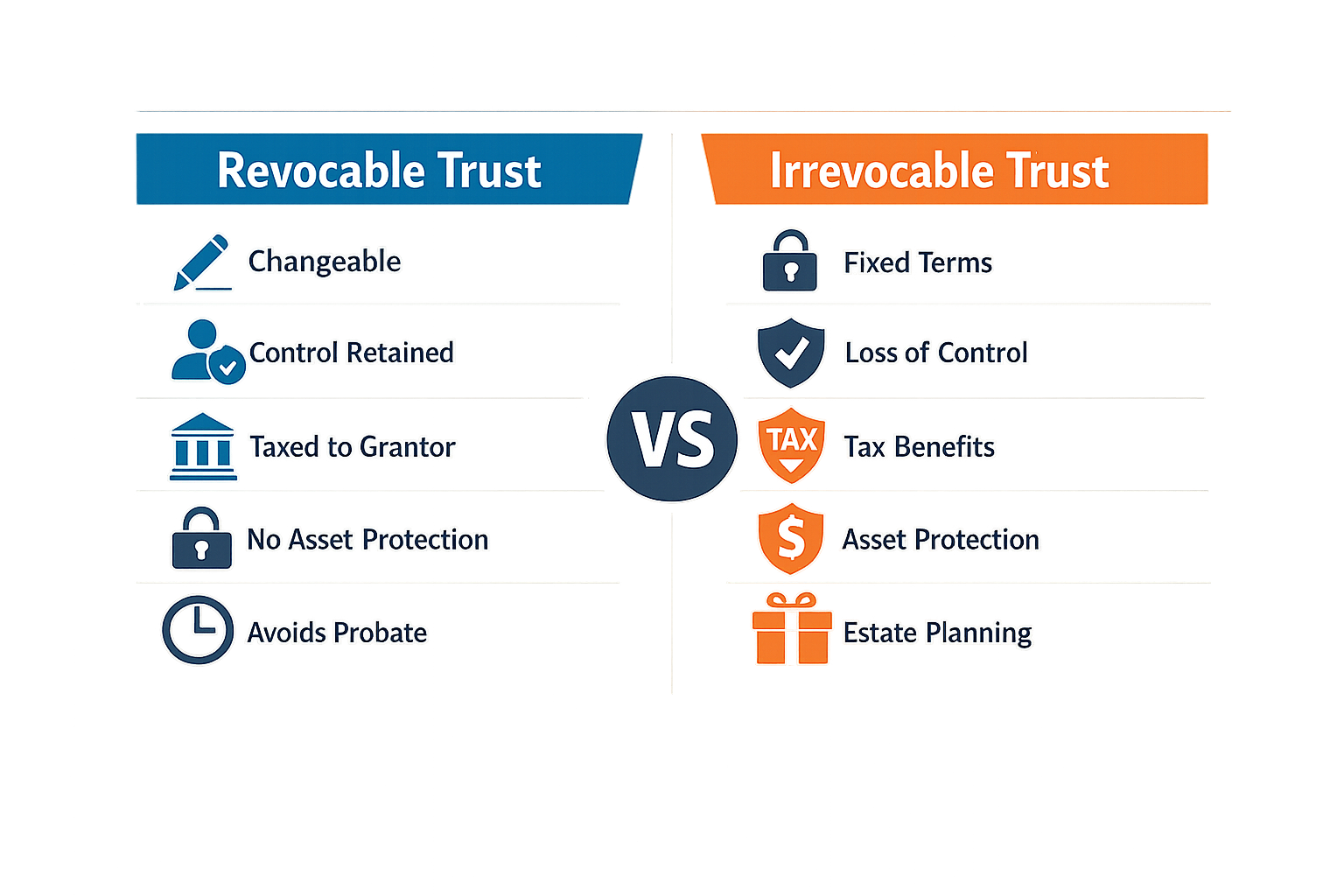
A living trust is a legal entity you create during your lifetime to hold and manage assets. You transfer ownership of property — real estate, bank accounts, investments — into the trust, and a trustee (often you, initially) manages those assets for the benefit of designated beneficiaries. When you die, the assets pass to your beneficiaries according to the trust terms, without going through probate court.
Here's what that actually means in practical terms: instead of your will directing the distribution of assets after you die (which requires court supervision), the trust operates as a separate legal container that continues functioning after your death. The successor trustee you named steps in, follows your instructions, and distributes assets to beneficiaries — all outside the public probate process.
The framework matters because estate planning isn't one-size-fits-all. Some families benefit significantly from living trusts. Others get the same practical results with simpler tools like beneficiary designations and payable-on-death accounts. The real question is whether the benefits justify the setup cost and ongoing management for your specific situation.
Understanding the mechanics — how living trusts work, what they accomplish, and what they cost — gives you the framework to have informed conversations with estate planning professionals. For many families, particularly those with real estate in multiple states or complex asset structures, living trusts solve real problems. For others, business succession planning or simpler beneficiary strategies might be more appropriate starting points.
The goal isn't finding the "best" estate planning tool in the abstract. The goal is matching the right tools to your assets, your family dynamics, and your priorities. A living trust is one option in that toolkit — worth understanding, not automatically necessary.
Understanding the Problem: Estate Planning Challenges
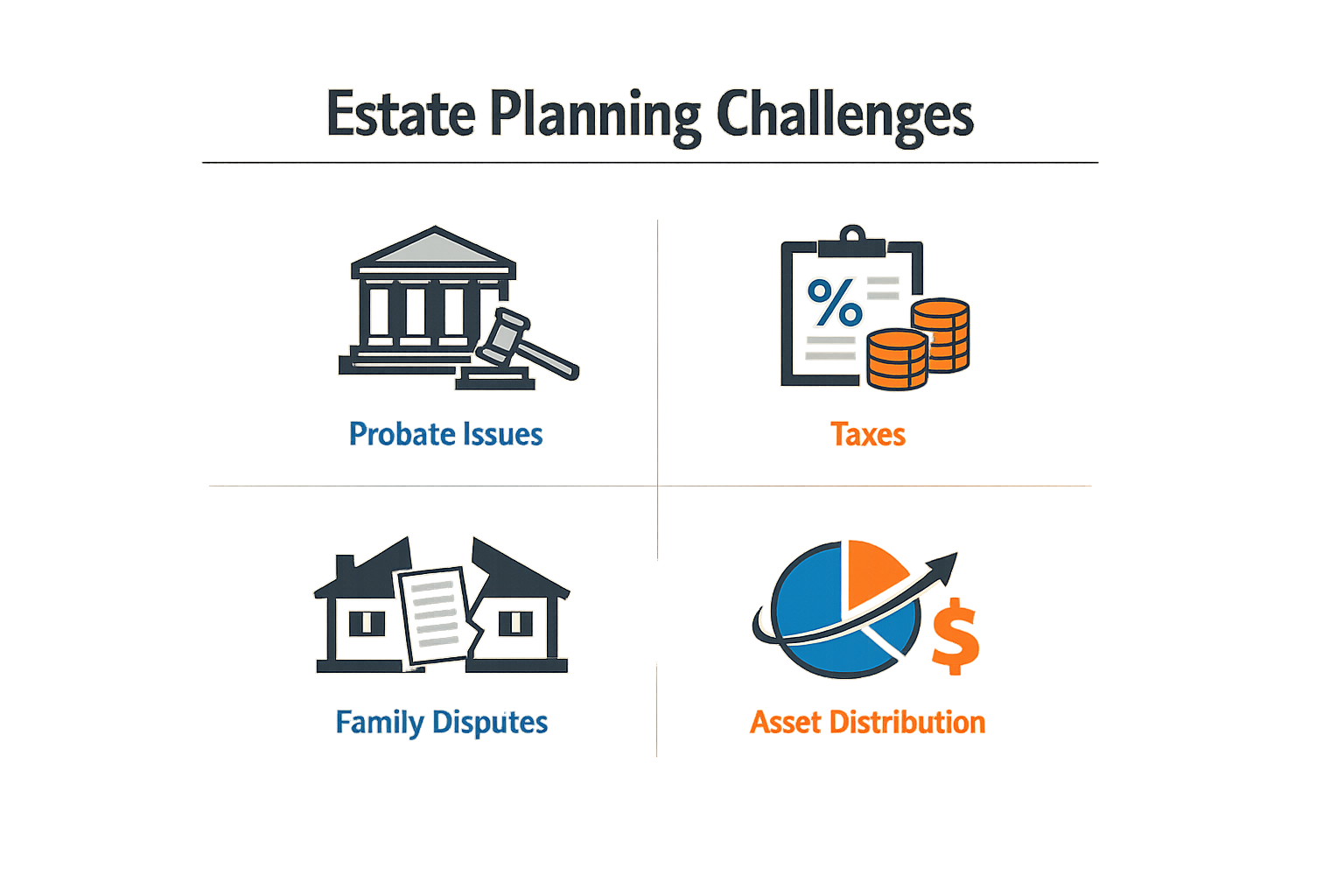
Most people put off estate planning the same way they put off dental work — they know it matters, but it feels complicated and unpleasant. The result is predictable: assets get tangled in probate, family members argue over unclear intentions, and the people you wanted to protect end up navigating a legal maze.
The framework for understanding estate planning challenges breaks into three practical categories: probate delays, privacy concerns, and management complexity. Each creates friction between what you intend and what actually happens when you're no longer around to clarify.
Probate Creates Delays and Costs
Probate is the court-supervised process of validating a will and distributing assets. In practical terms, it means your family waits months — sometimes over a year — while a judge confirms what everyone already knows: you wanted your spouse to inherit the house.
The math works like this: probate typically costs 3 to 7 percent of the estate's value in legal fees, court costs, and executor compensation. For a modest estate worth $500,000, that's $15,000 to $35,000 in expenses before anyone receives a dollar. The timeline stretches even longer if anyone contests the will or if assets span multiple states.
Privacy Disappears in Public Proceedings
When assets pass through probate, the details become public. Your neighbor can look up the value of your home. A estranged relative can see exactly who inherited what. Business competitors can review your financial holdings.
This matters more than most people realize. Families dealing with blended marriages, estranged children, or complex business interests often discover that public probate records create new conflicts. The information sits in court files indefinitely, accessible to anyone with internet access and a few minutes to search.
Management Gets Complicated During Incapacity
A common misconception: estate planning only matters after death. The real question is what happens if you're alive but unable to manage your affairs — after a stroke, during advanced dementia, or following a serious accident.
Without proper planning, your family faces a guardianship proceeding. A judge appoints someone to manage your finances and make healthcare decisions. The process is public, expensive, and slow. Your spouse might need court permission to access joint accounts or sell property to pay for your care. For business owners, the complications multiply — who signs contracts, approves payroll, or makes time-sensitive decisions?
The cheapest estate plan is the one that works when your family needs it, not the one that seemed simple when you signed it.
The Continuity Problem
Traditional wills stop working the moment you die. Someone must file the will with the probate court, notify creditors, inventory assets, and wait for court approval at each step. During this gap — often six to eighteen months — assets sit frozen.
A living trust continues operating without interruption. The trust document specifies exactly who takes over as trustee, what authority they have, and how assets should be managed or distributed. There's no gap, no court filing, and no public proceeding. The framework keeps working whether you're managing it yourself, incapacitated, or deceased.
For families with minor children, the continuity problem intensifies. A will names a guardian, but it doesn't fund that guardianship. The person raising your children might lack immediate access to the resources needed for their care. Similar challenges emerge in business succession planning, where operational continuity depends on clear authority and immediate access to business assets.
When Simple Planning Fails
Most people approach estate planning with the goal of keeping things simple. They write a basic will, name beneficiaries on retirement accounts, and assume that covers it. Here's what that actually means in practice:
- Real estate in multiple states triggers probate in each state
- Jointly-owned property with unclear ownership percentages creates disputes
- Beneficiary designations that contradict will provisions cause legal conflicts
- Assets titled in individual names freeze during incapacity proceedings
- Business interests without succession plans stall operations
The honest answer: simple planning works for simple situations. When you own property in multiple states, run a business, have minor children, or want to maintain privacy, the framework needs more structure.
How a Living Trust Works: Key Steps
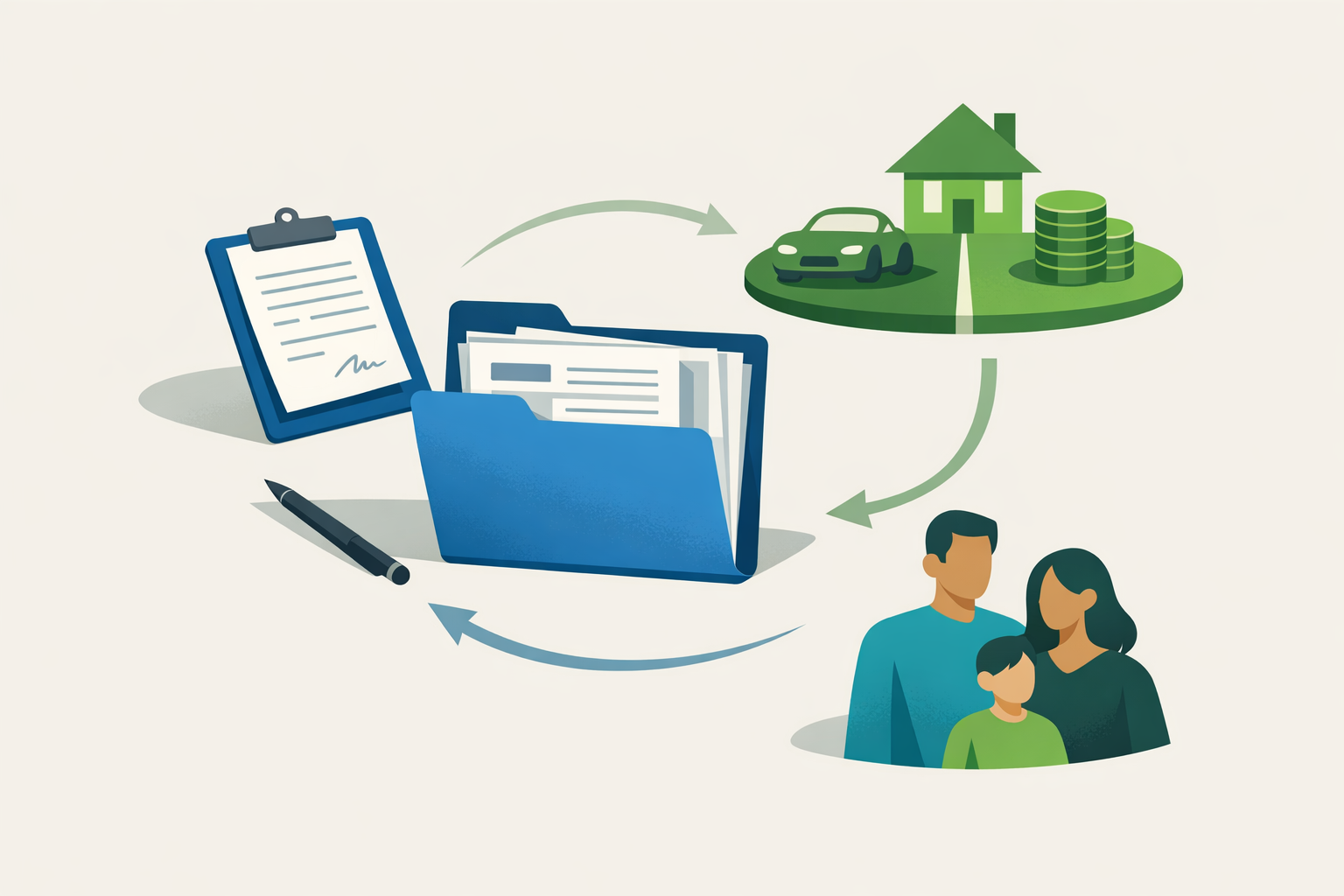
Setting up a living trust isn't as complicated as it sounds. The framework is straightforward: you create a legal entity, transfer assets into it, and name someone to manage those assets for your beneficiaries. Here's what that actually means in practical terms.
Creating the Trust Document
The first step is drafting a trust agreement. This legal document establishes the trust, names you as the grantor (the person creating the trust), and typically names you as the initial trustee (the person managing the assets). You'll also designate a successor trustee — the person who takes over management when you're no longer able to serve.
The trust agreement spells out how assets should be managed during your lifetime and how they'll be distributed after your death. For example, you might specify that all income is payable to a beneficiary until the trust terminates, at which point the remaining assets go to that beneficiary or their estate. The terms you set determine how the framework operates.
Step 1
Draft the trust agreement
Work with an estate planning attorney to create a trust document that names you as grantor and trustee, designates a successor trustee, identifies your beneficiaries, and outlines distribution terms. The agreement establishes the legal framework for everything that follows.
Funding the Trust
A trust document by itself doesn't accomplish anything — you have to actually transfer assets into it. This process is called "funding" the trust. In practical terms, you're changing the ownership of assets from your individual name to the name of the trust.
For real estate, that means signing and recording a new deed. For bank accounts and brokerage accounts, it means retitling those accounts in the trust's name. For personal property like vehicles or valuable collections, you may need to execute assignment documents. The trustee (initially you) then has complete discretion to manage these assets according to the trust terms.
Step 2
Transfer assets to the trust
Retitle real estate by recording new deeds, move financial accounts into the trust's name, and document the transfer of personal property. Assets that remain in your individual name won't be governed by the trust — they'll still go through probate.
Managing Trust Assets During Your Lifetime
As the initial trustee of a revocable living trust, you maintain control over the assets. You can buy, sell, invest, or distribute assets just as you did before — the difference is you're acting in your capacity as trustee rather than as an individual owner. Because you retain the power to revoke the trust at any time prior to your death, you're treated as the owner for tax purposes.
This is where the "living" part matters. The trust operates during your lifetime, not just after your death. You can amend the terms, add or remove assets, or dissolve the trust entirely if your circumstances change. For those interested in other flexible planning vehicles for business owners, a SEP IRA offers similar adaptability for retirement savings.
Step 3
Manage assets as trustee
Handle trust assets according to the terms you've set, making investment decisions and distributions as needed. Keep clear records of all transactions. Because you're both grantor and trustee, you report all income and gains on your personal tax return — the trust doesn't file separately.
Transition to the Successor Trustee
When you die or become incapacitated, the successor trustee you named steps in automatically. There's no court proceeding required, no probate filing, no public notice. The successor simply provides a death certificate or medical documentation and begins managing the trust assets according to your instructions.
The successor trustee distributes assets to your beneficiaries based on the terms you established. If you specified that proceeds pass to a surviving spouse with remainder to children, that's the framework the successor follows. If you created ongoing trusts for minor children, the successor manages those assets until the children reach the age you designated.
Maintaining the Trust Over Time
A living trust isn't a set-it-and-forget-it document. As you acquire new assets, you need to transfer them into the trust. If you buy a house, retitle it in the trust's name. If you open a new investment account, register it as a trust account. Assets you forget to transfer will end up in probate.
It is also important to review and update the trust terms periodically. Major life events — marriage, divorce, births, deaths, significant changes in wealth — often warrant amendments. The goal is keeping the trust aligned with your current circumstances and intentions.
Tips and Tricks for Managing Your Living Trust
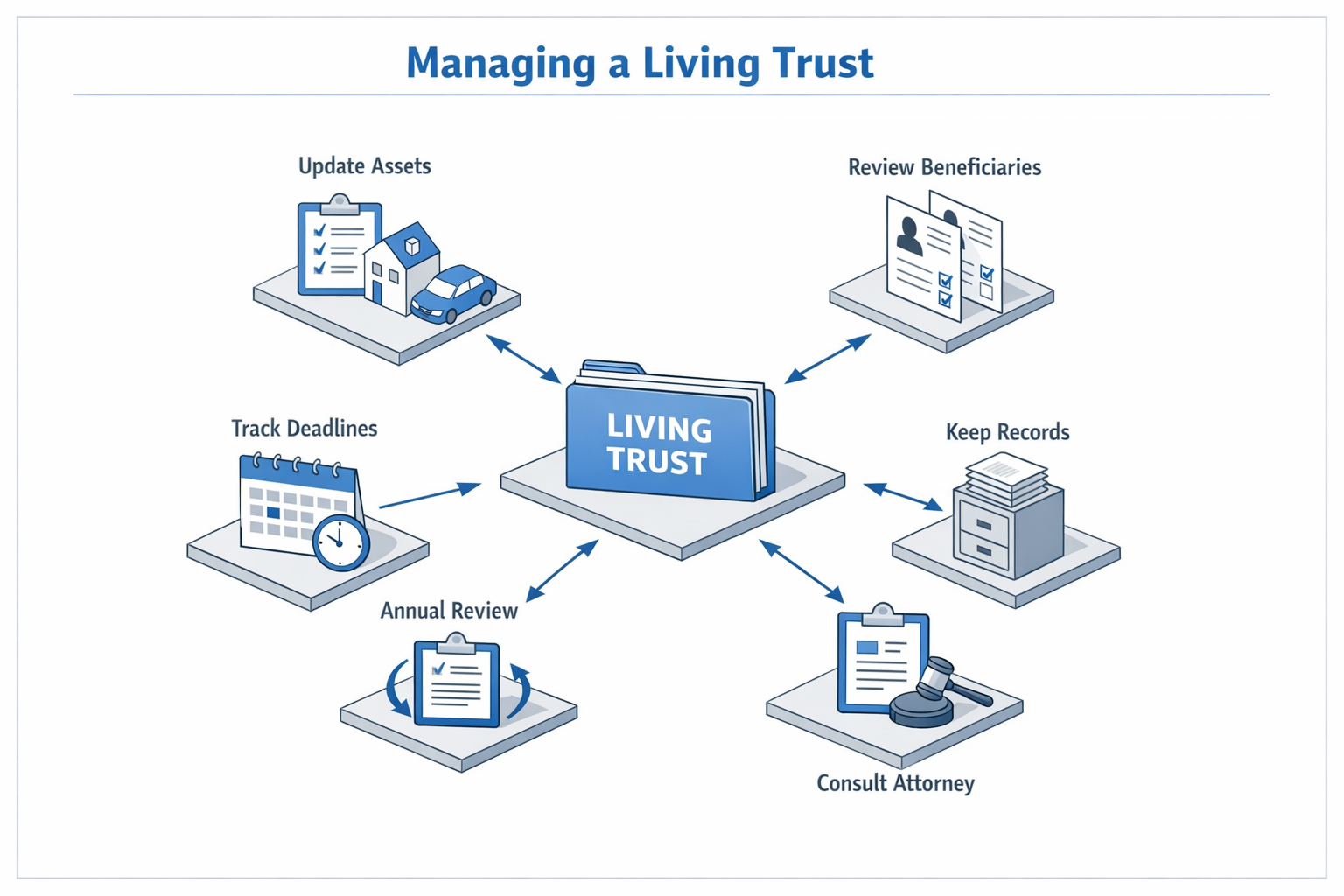
Setting up a living trust is one thing. Managing it effectively over time is another. Most people create a trust and then forget about it — until life changes and they realize the trust no longer reflects their situation. Here's how to keep your trust current and functional.
Keep Your Trust Funded
The most common mistake people make is creating a living trust and then failing to transfer assets into it. A trust only controls what you put into it. If you buy a new house, open a new bank account, or acquire other significant assets, those need to be titled in the name of the trust. Otherwise, they'll end up in probate anyway — exactly what you were trying to avoid.
Set a calendar reminder to review your asset titles annually. Check that real estate deeds, bank accounts, and investment accounts all list the trust as the owner. When you acquire new assets, make trust funding part of your standard process.
Maintain Proper Documentation
Your trustee will need clear documentation to manage the trust effectively. Keep the original trust document in a secure location — a fireproof safe or safe deposit box — and make sure your successor trustee knows where to find it. Provide the trustee with a list of all trust assets, including account numbers, locations, and approximate values.
For retirement accounts held in trust, the IRS requires specific documentation from the trustee to the account custodian. Without proper paperwork, distribution rules can become complicated and potentially costly. Keep copies of beneficiary designation forms, trust certifications, and any amendments in one organized location.
Review and Update After Major Life Events
Your living trust should evolve with your life. Marriage, divorce, births, deaths, significant changes in assets, or moves to a different state all warrant a trust review. Some changes require formal amendments; others might mean you need to adjust how assets are titled or who serves as trustee.
Common triggers for trust updates include:
- Marriage or divorce
- Birth or adoption of children or grandchildren
- Death of a beneficiary or trustee
- Significant increase or decrease in assets
- Purchase or sale of real estate
- Changes in tax law that affect estate planning
- Relocation to a different state
Work with an estate planning attorney to determine whether your situation requires a formal amendment or a complete restatement of the trust. Minor changes can often be handled with an amendment, but major overhauls may require restating the entire document.
Understand the Tax Implications
While you're alive and serving as trustee, a revocable living trust doesn't create separate tax obligations. You report all trust income and expenses on your personal tax return using your Social Security number. The trust itself doesn't file a separate return.
However, income distributions to beneficiaries can have tax implications. Trust income distributed to a beneficiary becomes taxable to that beneficiary in the year of distribution. If you're making distributions from your trust while you're alive, understand how those distributions affect both your tax situation and the beneficiary's.
For guidance on how trusts interact with retirement accounts and other tax-advantaged vehicles, see our guide on business succession planning, which covers similar wealth transfer strategies.
A trust only works if you fund it — and keep it funded as your life changes.
Communicate With Your Beneficiaries
You don't need to disclose every detail of your trust to your beneficiaries, but some communication prevents confusion and conflict later. Let your successor trustee know they've been named and where to find the trust document. Consider discussing your general intentions with adult beneficiaries, especially if the distribution plan is complex or unequal.
Clear communication now can prevent disputes after you're gone. Beneficiaries who understand your reasoning are less likely to challenge your decisions or create conflict with the trustee.
Work With Professionals When Needed
Estate planning isn't static. Tax laws change, family situations evolve, and asset values fluctuate. Schedule a review with an estate planning attorney every three to five years, even if nothing major has changed. An attorney can identify issues you might not recognize and suggest updates that keep your trust aligned with current law.
If your trust holds significant assets or complex investments, consider working with a financial advisor who understands trust management. The trustee's fiduciary duty requires prudent investment decisions — professional guidance can help ensure those standards are met.
Conclusion: Is a Living Trust Right for You?
Most people don't need a living trust. Here's what that actually means: if your estate is straightforward — a house, some retirement accounts, a bank account with clear beneficiary designations — a basic will and properly titled assets handle the job. The framework for deciding comes down to three factors: the size of your estate, the complexity of your wishes, and whether avoiding probate is worth the setup cost.
The honest answer is that living trusts make sense for specific situations. If you own property in multiple states, a living trust avoids multiple probate proceedings. If you have a blended family or want precise control over how and when assets pass to beneficiaries, a trust provides that structure. If privacy matters — probate is public record, trusts are not — that's another reason to consider one. But for a single person with modest assets and simple wishes, the cost and maintenance often outweigh the benefit.
When the Math Works
The real question is whether the upfront cost — typically $1,500 to $3,000 for attorney-drafted documents — and the ongoing responsibility of funding and maintaining the trust justify the probate avoidance. In states with expensive or slow probate processes, the math tilts toward a trust. In states with streamlined probate, it tilts away. A common misconception is that trusts eliminate estate taxes. They don't. Estate tax thresholds are set by federal and state law regardless of whether you use a will or a trust.
If you're unsure whether your situation calls for a trust, talk to a licensed estate planning attorney who practices in your state. They'll look at your asset mix, your family structure, and your state's probate rules. What works in California doesn't necessarily work in Texas. The goal is getting in the right range for your circumstances, not following a one-size-fits-all template.
Next Steps
If you decide a living trust makes sense, the process is straightforward: draft the trust document, fund it by retitling assets, and keep it current as your life changes. If you decide it doesn't, make sure you have a will, updated beneficiary designations on retirement accounts and life insurance, and a durable power of attorney for financial decisions. Those documents handle most estate planning needs without the trust overhead.
For business owners, business succession planning often intersects with trust planning — especially when the goal is transferring ownership while maintaining control during your lifetime. The framework is similar: define the problem, match the tool to the situation, and build in flexibility for changes.
The difference between a well-planned estate and a messy one isn't the complexity of the documents. It's whether the documents match the reality of your assets and your wishes. A living trust is one tool in that toolkit, not a requirement. When you're ready to take the next step, start with an inventory of what you own, who you want to receive it, and what problems you're trying to solve. That clarity makes the estate planning conversation productive, whether the answer is a trust, a will, or something in between.
Related reading
What Is Probate? Understanding the Probate Process and How to Avoid It