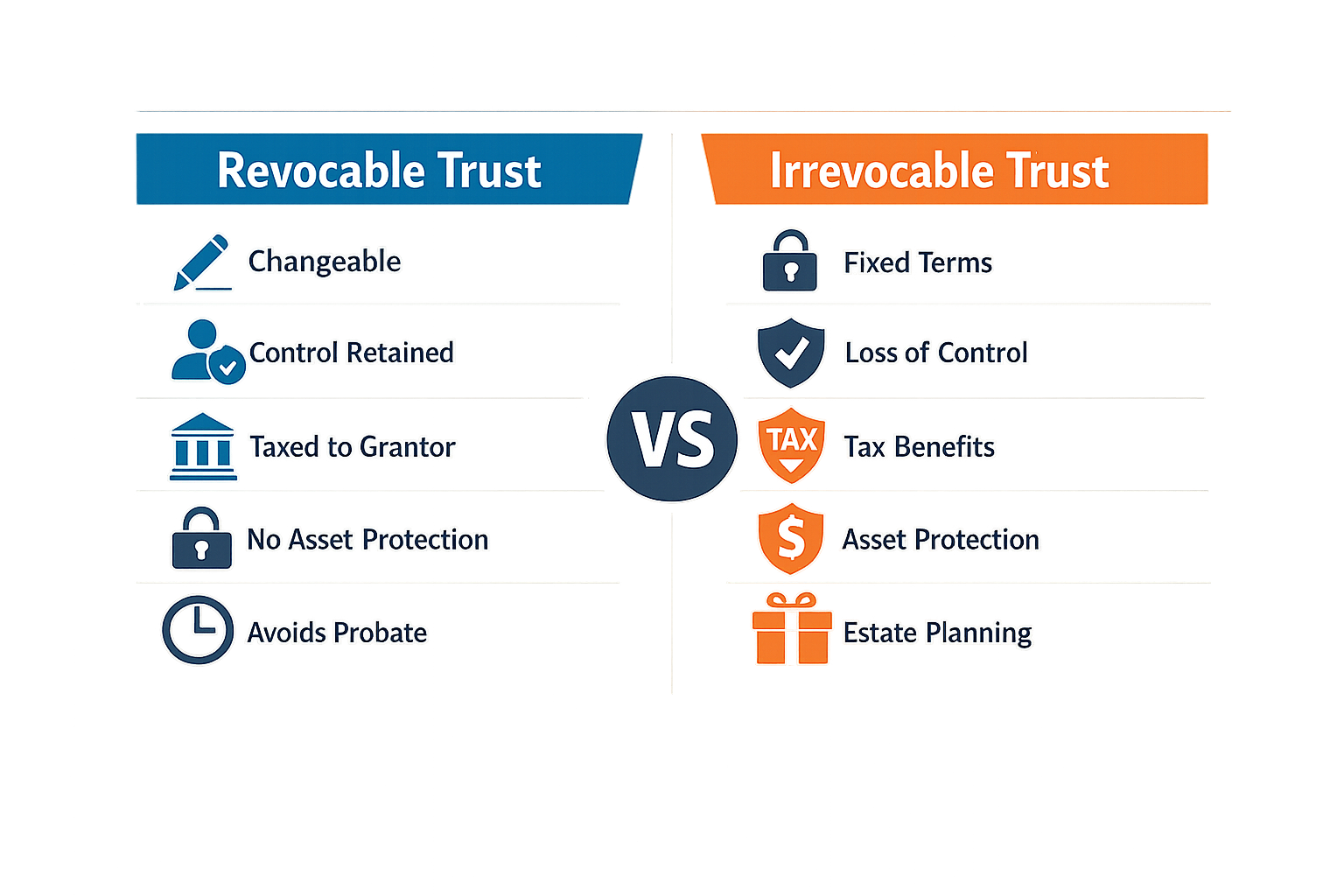
Introduction
Most people don't lie awake wondering about the probate process. They lie awake wondering what happens to their family if they're not around to provide. The short answer: without planning, their estate enters probate — a court-supervised process that distributes assets, settles debts, and validates the will.
Probate is the legal process through which a deceased person's assets are distributed according to their will or state law if there is no will. The court oversees the entire administration, ensuring creditors are paid, taxes are filed, and beneficiaries receive what they're entitled to receive. For some estates, this process takes months. For others, it stretches into years.
The framework matters because probate affects three things families care about: time (how long before beneficiaries see money), cost (what the estate pays in fees and expenses), and privacy (what becomes public record). Understanding how the probate process works — and when it's required — is the starting point for building an estate plan that protects your family's interests. For small business owners, business succession planning often intersects with probate considerations, particularly when company ownership needs to transfer efficiently.
The honest answer is that probate isn't inherently bad — it provides structure and legal protection for estates. But it's also not free, not fast, and not private. For informational and educational purposes, this article explains what the probate process actually involves, the practical problems it creates, and the straightforward strategies to minimize or avoid it when you're ready to take the next step in your estate planning.
The goal is getting in the right range — enough structure to protect your estate, enough flexibility to avoid unnecessary court involvement, and enough clarity that your family knows what to expect when the time comes.
Understanding the Problems Associated with Probate
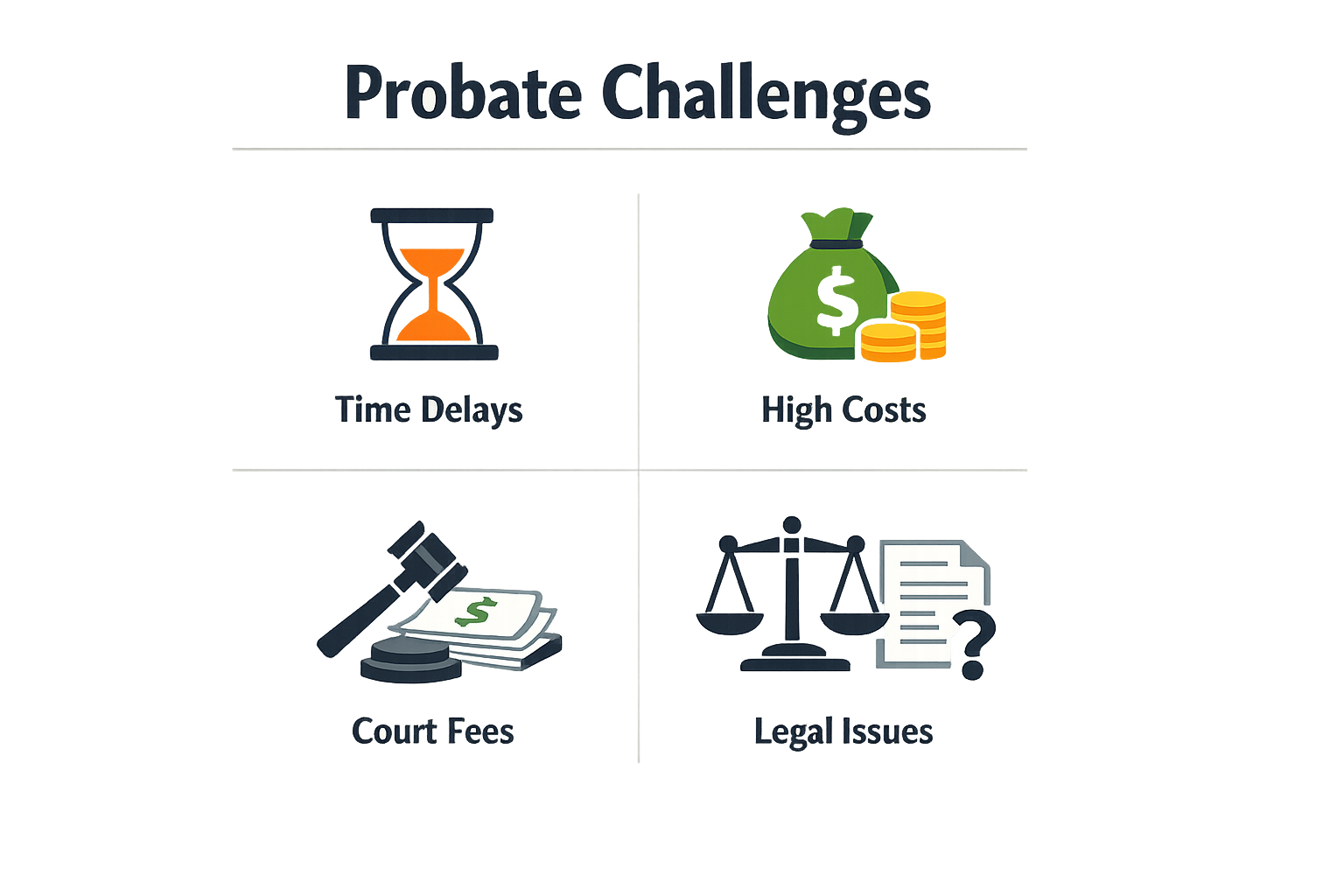
The probate process creates friction at exactly the wrong time. When a family loses someone, the last thing they need is months of court proceedings, mounting legal bills, and public disclosure of private financial matters. Yet that's the default path when assets pass through probate.
Time and Expense
Probate takes time — typically six months to two years, depending on the estate's complexity and whether anyone contests the will. During that period, assets remain frozen. The family can't access bank accounts, sell property, or distribute inheritances until the court approves every step.
The costs add up quickly. Court fees, attorney fees, executor compensation, and appraisal costs routinely consume 3% to 7% of the estate's value. For a modest estate worth $500,000, that's $15,000 to $35,000 in expenses before a single dollar reaches the intended beneficiaries.
Loss of Privacy
Probate is a public process. Court filings become part of the public record, meaning anyone can look up what you owned, who inherited it, and how much it was worth. For families who value privacy, this exposure can feel like a violation.
Creditors and opportunists monitor probate filings. Once an estate enters probate, creditors have a window to file claims, and scammers often target grieving families with inheritance schemes.
Complications from Estate Planning Mistakes
When a will lacks clear provisions — particularly around disclaimers or contingent beneficiaries — state law fills the gaps. That's rarely what the deceased intended. If a beneficiary disclaims an inheritance and the will doesn't specify what happens next, the probate court applies default state rules that may send assets to unintended recipients.
In community property states, jointly owned property can create additional complications if estate planning documents don't clearly address how each spouse's interest should pass. The probate court must untangle ownership interests before distribution, adding time and expense.
The probate process doesn't just delay inheritance — it exposes private family matters to public scrutiny and depletes the estate through court costs and legal fees.
Administrative Burden on Executors
Serving as executor during probate means months of paperwork, court appearances, and liability. The executor must inventory all assets, notify creditors, file tax returns, and account for every dollar. A single mistake can trigger personal liability or beneficiary lawsuits.
Many families discover too late that their estate plan — or lack of one — forces loved ones into an administrative nightmare at the worst possible moment. Understanding these problems is the first step toward avoiding them. For business owners, similar planning challenges arise in business succession planning, where lack of clear frameworks creates operational disruption alongside probate delays.
Steps to Navigate the Probate Process
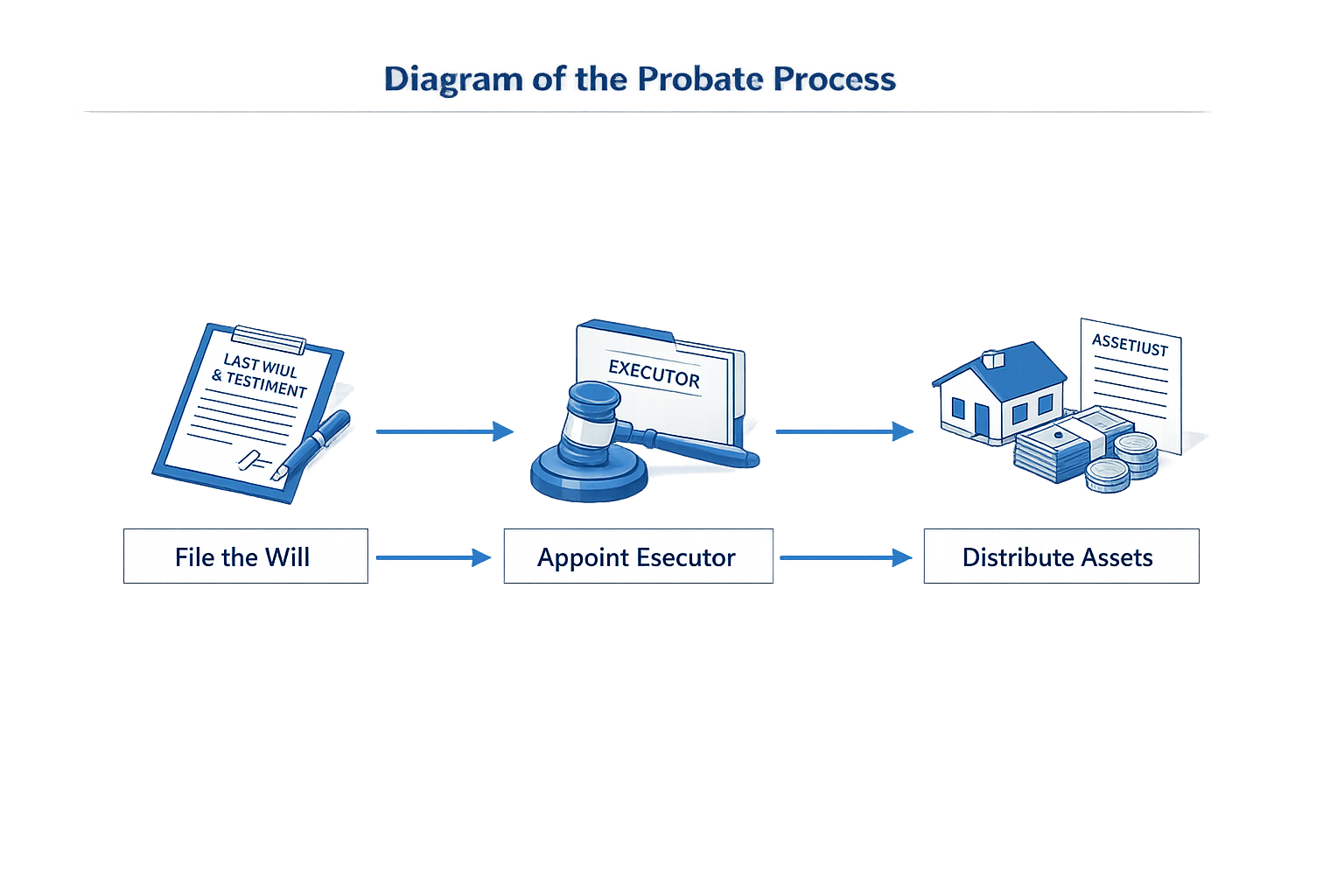
The probate process is the legal framework through which a deceased person's estate is administered, including the distribution of property and payment of debts. While the specific procedures vary by state, the fundamental structure remains consistent across jurisdictions. Understanding these steps helps families prepare for what lies ahead and clarifies why many estate planners recommend strategies to avoid probate altogether.
A personal representative — an executor named in the will or an administrator appointed by the court — manages the estate throughout this process. This individual carries legal responsibility for the decedent's property and must navigate a series of court-supervised requirements before any assets reach beneficiaries.
Filing the Petition and Appointing the Personal Representative
Step 1
File the petition with probate court
The process begins when someone files a petition with the probate court in the county where the deceased lived. If there's a will, the named executor files it along with the petition. If there's no will, a family member or interested party petitions to become the administrator. The court reviews the documents and schedules a hearing.
Step 2
Attend the probate hearing
At the hearing, the court validates the will (if one exists) and officially appoints the personal representative. The representative receives legal authority through documents called "letters testamentary" or "letters of administration." These credentials allow the representative to act on behalf of the estate — opening estate bank accounts, accessing financial records, and managing property.
The timeline for this initial phase typically runs two to eight weeks, depending on court schedules and whether anyone contests the will or the appointment.
Notifying Creditors and Inventorying Assets
Step 3
Notify creditors and beneficiaries
The personal representative must notify all known creditors of the death and the probate proceeding. Most states also require publishing a notice in a local newspaper to reach unknown creditors. Beneficiaries named in the will receive formal notice as well. Creditors have a limited window — often four to six months — to file claims against the estate.
Step 4
Inventory and appraise estate assets
The representative compiles a complete inventory of the deceased's assets: real estate, bank accounts, investments, personal property, business interests. Many states require professional appraisals for significant assets like real estate or collectibles. The inventory gets filed with the court, creating a public record of the estate's value.
Paying Debts and Distributing Assets
Step 5
Pay valid claims and taxes
The representative reviews creditor claims, challenges questionable ones, and pays valid debts from estate funds. Priority matters: funeral expenses and estate administration costs come first, then taxes, then general creditors. The representative files the deceased's final income tax return and, if the estate is large enough, an estate tax return. Nothing gets distributed to beneficiaries until debts and taxes are settled.
Step 6
Distribute remaining assets to beneficiaries
Once debts are paid and the waiting period for creditor claims expires, the representative petitions the court for permission to distribute assets. The court reviews the accounting, confirms all requirements are met, and authorizes distribution according to the will or, if there's no will, according to state intestacy law.
Step 7
Close the estate
After distribution, the representative files a final accounting with the court showing all income, expenses, and distributions. The court reviews it, beneficiaries have a chance to object, and if everything checks out, the court issues an order closing the estate. The representative is formally discharged from duty.
The math works like this: even a straightforward estate typically takes eight to twelve months from filing to closing. Complicated estates — those with business interests, disputes among heirs, or hard-to-value assets — can stretch to two years or longer.
The probate process creates a public record and a court-supervised framework, which provides oversight but also explains why many families seek alternatives through advance planning.
For families looking to streamline the transfer of assets to the next generation, understanding these steps clarifies why tools like business succession planning and beneficiary designations become central to effective estate strategies. The next section covers practical approaches to avoid probate where it makes sense for your situation.
Tips to Avoid Probate
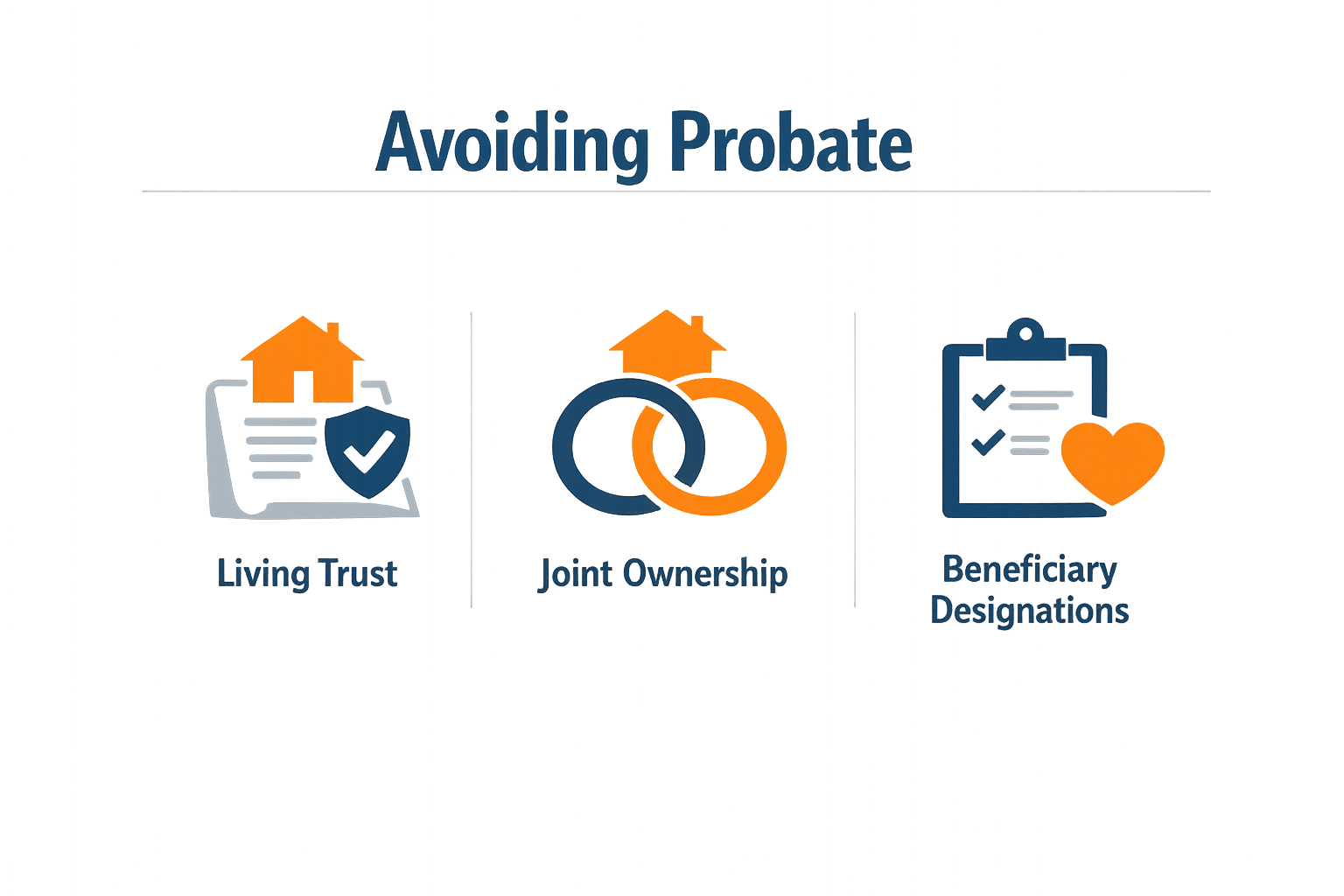
Most people don't set out to make their family's life harder after they're gone. But without a framework for transferring assets outside probate, that's often the result. The good news: several straightforward strategies can help your estate bypass the probate process entirely, saving your beneficiaries time, money, and stress.
Create a Living Trust
A living trust is one of the most effective tools for avoiding probate. When assets are transferred into a living trust, control is maintained during the lifetime of the grantor, but those assets pass directly to beneficiaries when the grantor dies — no court involvement required. Real estate, bank accounts, investment portfolios, and business interests can all be held in trust. The framework is simple: create the trust, fund it with assets, and name beneficiaries who receive those assets according to instructions.
The key is actually funding the trust. Creating the document isn't enough — assets must be retitled in the trust's name. An unfunded trust accomplishes nothing.
Designate Beneficiaries on All Accounts
Retirement accounts, life insurance policies, and many bank accounts allow naming beneficiaries directly. These assets transfer automatically to the named beneficiaries, completely bypassing probate. Review these designations regularly — life changes like marriage, divorce, or the birth of children often require updates.
For bank accounts and investment accounts that don't have built-in beneficiary designations, many states allow payable-on-death (POD) or transfer-on-death (TOD) designations. These work the same way: the account passes directly to the named person when the account holder dies.
Consider Joint Ownership Structures
Joint ownership with right of survivorship automatically transfers property to the surviving owner. This works for real estate, bank accounts, and investment accounts. When one owner dies, the survivor becomes the sole owner without probate.
The math here is straightforward, but the implications aren't always simple. Joint ownership means the co-owner has immediate access and control. Adding an adult child to a bank account gives them legal authority to withdraw funds today, not just after the account holder's death. For many families, a trust or beneficiary designation offers more control.
Use Spousal Disclaimer Strategies
In some situations, a surviving spouse can disclaim a portion of inherited property, redirecting it to other beneficiaries according to the estate plan. This strategy can affect how assets are distributed and may help optimize the overall estate structure. The disclaimer must be made correctly and within specific timeframes to be valid.
Keep Estate Values Below Probate Thresholds
Many states allow small estates to bypass formal probate through simplified procedures. The threshold varies by state — some set it at $25,000, others at $100,000 or more. If an estate falls below a state's limit, beneficiaries may be able to claim assets through an affidavit process rather than full probate.
This approach has limits. You can't artificially reduce your estate by giving away assets on your deathbed, and structuring finances solely to stay under a threshold if it compromises actual needs is not advisable. But for people with modest estates, understanding your state's small estate procedures is worth the time.
Review and Update Regularly
Estate planning isn't a one-time event. Review beneficiary designations, trust documents, and ownership structures every few years and after major life events. An outdated plan can force an estate into probate even when steps were taken to avoid it.
For more comprehensive planning that includes business interests, see our guide on business succession planning.
The honest answer: avoiding probate requires upfront effort. But that effort — creating trusts, updating beneficiary forms, retitling assets — is measured in hours. The probate process your family avoids is measured in months or years. The framework is straightforward. The payoff is real.
Conclusion
The probate process is the legal framework through which a deceased person's estate is administered, debts are settled, and assets are distributed. While it serves an important function in protecting creditors and ensuring proper asset transfer, it also introduces delays, costs, and public disclosure that many families would prefer to avoid.
The good news: probate is not inevitable. With straightforward planning — beneficiary designations, joint ownership arrangements, and trusts where appropriate — most families can structure their estates to bypass probate entirely or reduce its scope significantly. The framework isn't complicated, but it does require action while you're still here to make decisions.
The honest answer is that most people put off estate planning because they think it's expensive, complex, or something they'll get to later. In practical terms, the cost of avoiding probate is almost always lower than the cost of going through it. A few hours spent reviewing beneficiary forms and ownership structures now can save your family months of court proceedings and thousands in legal fees.
When ready to take the next step, talk to a licensed financial professional about your specific situation. Business succession planning follows similar principles — transferring ownership efficiently without court involvement — and the same planning tools often apply to both personal and business assets. The goal is getting in the right range for your circumstances, not achieving perfection.
For informational and educational purposes, understanding probate means understanding what you're planning around. The process exists for a reason, but that doesn't mean every estate needs to go through it.
Related reading
What Is a Power of Attorney? Types, How It Works, and How to Set One