
Introduction
Most people approach investing the same way they approach assembling furniture without instructions — with good intentions and no framework. The result is predictable: confusion, second-guessing, and a nagging sense that someone else knows a secret you don't.
Here's what that actually means: an index fund is an investment vehicle designed to match the performance of a specific market index, like the S&P 500 or the total U.S. stock market. Instead of trying to beat the market by picking individual winners, an index fund owns a slice of everything in the index it tracks. When the index goes up, your investment goes up. When it goes down, your investment follows.
The framework is straightforward. Index funds remove the guesswork of stock selection and replace it with a disciplined, diversified approach. They're not as complicated as they sound, and for most people building wealth over decades — whether through a 401(k), IRA, or taxable account — they're worth understanding. If you're exploring retirement account options like a SEP IRA or evaluating investment choices in your employer's plan, index funds are likely already on the menu.
The honest answer: index funds won't make you rich overnight, and they're not designed to. They're designed to grow wealth steadily, predictably, and with fewer fees eating into your returns than most alternatives. The goal is getting in the right range for your time horizon and risk tolerance, not chasing the next hot stock.
This guide walks through what an index fund actually is, why it matters for your financial plan, how to invest in one, and the common mistakes that trip people up along the way. For informational and educational purposes, we'll cover the fundamentals — not personalized advice, but the framework you need to make informed decisions when you're ready to take the next step.
Learn what is an index fund and how it can be a smart investment choice for your portfolio. Discover the benefits, risks, and key strategies related to what is an index fund.
What Is an Index Fund?
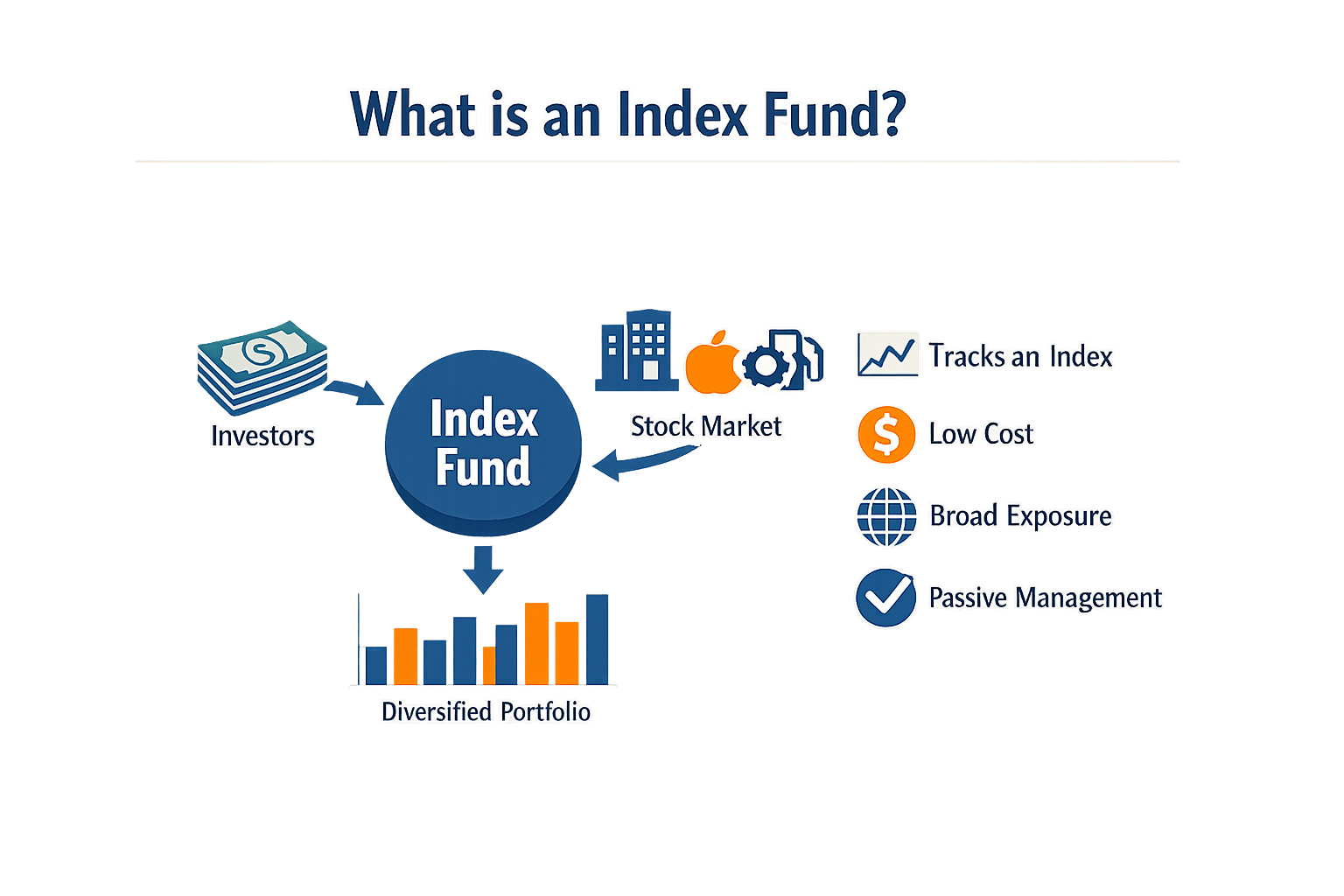
An index fund is an investment fund designed to replicate the performance of a specific market index — think the S&P 500 or the total U.S. stock market. Instead of a fund manager picking individual stocks, an index fund holds the same securities as the index it tracks, in roughly the same proportions. The goal is straightforward: match the index's returns, not beat them.
Index funds come in two main structures: mutual funds and exchange-traded funds (ETFs). Both track the same indexes, but they trade differently. Index mutual funds are bought and sold once per day at the closing price. ETFs trade throughout the day like stocks, which gives you more control over timing but doesn't change the underlying strategy.
How Index Funds Work
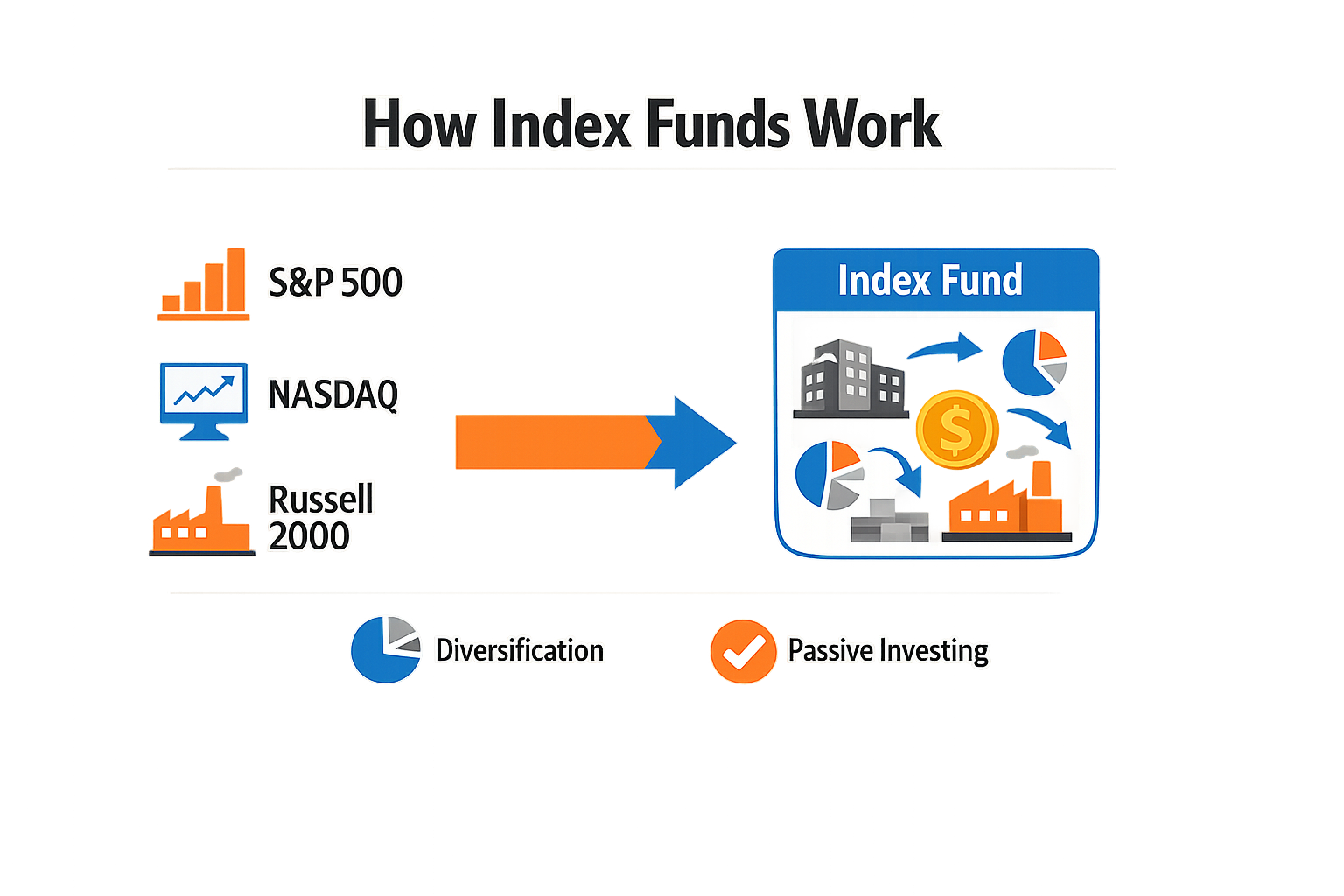
The mechanics are simpler than most people expect. When you invest in an index fund, your money is pooled with other investors' contributions. The fund uses that pooled capital to buy shares of every company (or bond, or other asset) in the target index. If the S&P 500 holds 500 companies, the fund holds all 500 in the same weights.
Because index funds don't require a team of analysts to research individual stocks, their operating costs are lower than actively managed funds. That cost difference compounds over decades — a point worth understanding when you're comparing long-term investment options like a SEP IRA or other retirement accounts.
The Structure Behind the Strategy
Index funds operate as common investment funds, where assets from multiple investors are pooled and managed according to a defined set of rules. The fund's prospectus lays out which index it tracks, how it handles dividends, and what fees it charges. Transparency is built into the model — you can see exactly what the fund owns at any time because it mirrors a published index.
This structure makes index funds predictable. You won't outperform the market, but you won't underperform it either (minus the small fee). For investors building diversified portfolios, that predictability is often more valuable than chasing above-average returns.
Why Index Funds Matter
Most people approach retirement savings with good intentions but no framework. They open an account, pick a few investments that sound familiar, and hope it works out. The result is predictable: portfolios that look diversified on paper but carry concentrated risk.
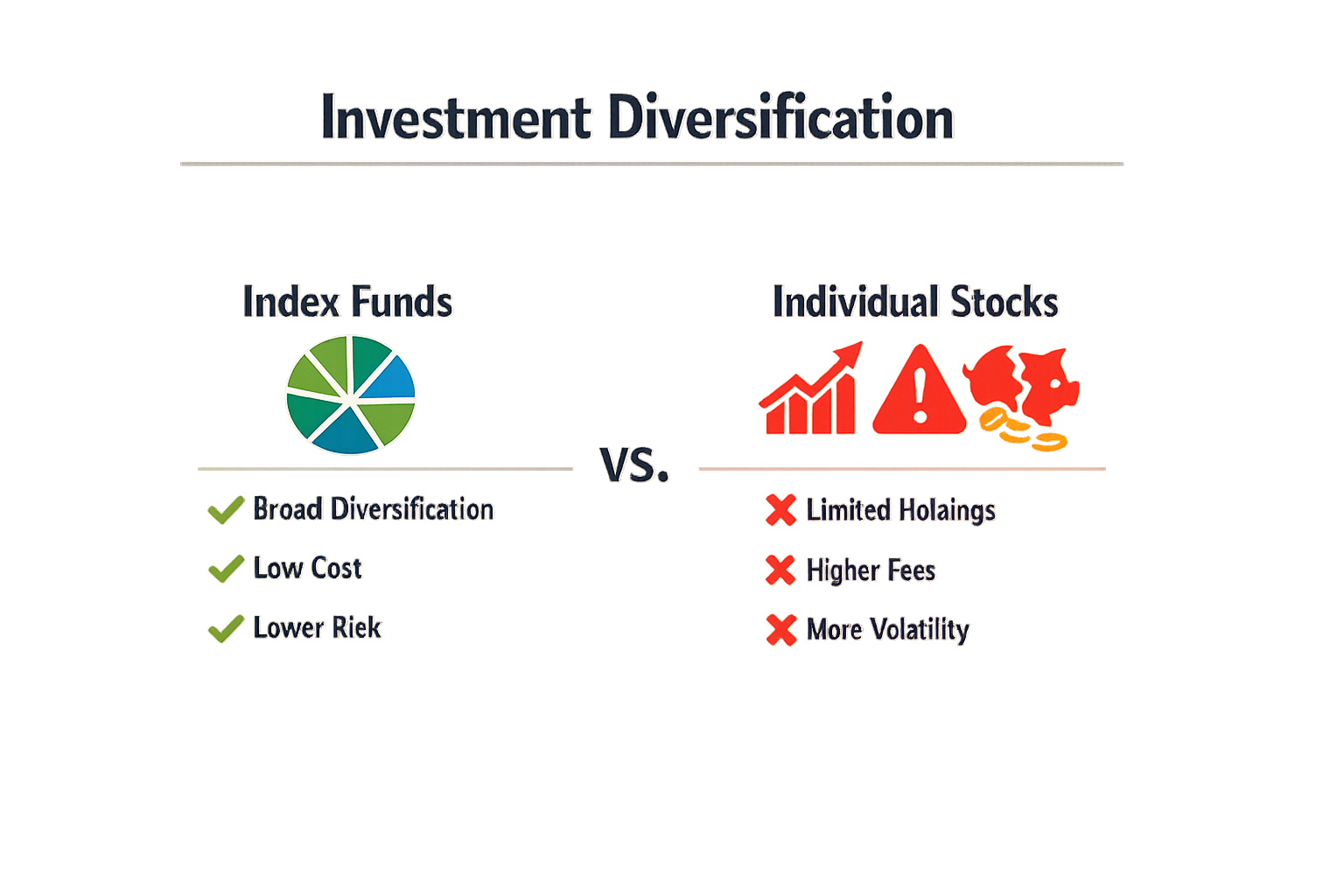
Index funds matter because they solve the diversification problem without requiring you to become a market expert. Instead of betting on individual companies or trying to time the market, you're buying a slice of the entire market at once. That's not just convenient — it's a fundamentally different approach to building wealth.
The Diversification Framework
Here's what diversification actually means in practical terms: spreading your money across enough different investments that a single company's failure or a single sector's downturn doesn't derail your retirement. An index fund tracking a broad market index gives you exposure to hundreds or thousands of companies in a single transaction.
The math works like this: when you own shares in one company, your returns depend entirely on that company's performance. When you own shares in 500 companies through an index fund, your returns depend on the overall market. Individual companies can fail — and they do — but the market as a whole has historically grown over long periods.
The Cost Advantage
Index funds typically charge lower fees than actively managed funds because they're not paying analysts to research stocks or managers to make trading decisions. They simply track an index. Those lower fees compound over decades.
The difference between a fund charging 0.05% annually and one charging 1% might not sound significant. Over 30 years on a $100,000 investment growing at 7% annually, that difference is roughly $80,000 in your pocket versus the fund company's. The honest answer: fees matter more than most people realize.
Risk in the Right Range
A common misconception: index funds are "safe" investments. They're not. They're subject to market volatility, and you can lose money — sometimes significant amounts in the short term. What they offer is market risk, not safety.
The goal is getting in the right range of risk for your time horizon, not eliminating risk entirely.
For someone 30 years from retirement, market volatility is noise. For someone retiring next year, it's a real problem. Index funds don't change that equation — they just make it easier to build a diversified portfolio at the appropriate risk level for your situation. Understanding how different retirement accounts work, like a SEP IRA for self-employed workers, helps you match the right investment vehicles to your timeline.
The Time Horizon Question
Index funds work best when you have time. The market goes up and down in the short term, but over periods of 10, 20, or 30 years, the trend has been upward. That doesn't guarantee future performance, but it's the framework most long-term investors use.
If you're investing money you'll need in two years, an index fund tracking the stock market is the wrong tool. If you're investing money you won't touch for 20 years, it's worth understanding. The real question is whether your time horizon matches the investment's natural volatility.
What Index Funds Don't Do
They don't beat the market — they match it. They don't protect you from downturns. They don't eliminate the need to think about asset allocation, rebalancing, or tax strategy. They're a tool, not a complete financial plan.
Most people don't realize that index funds still require decisions: which index to track, how much to invest, when to rebalance, and how to coordinate them with the rest of your financial picture. The framework is straightforward, but it's not automatic.
How to Invest in Index Funds
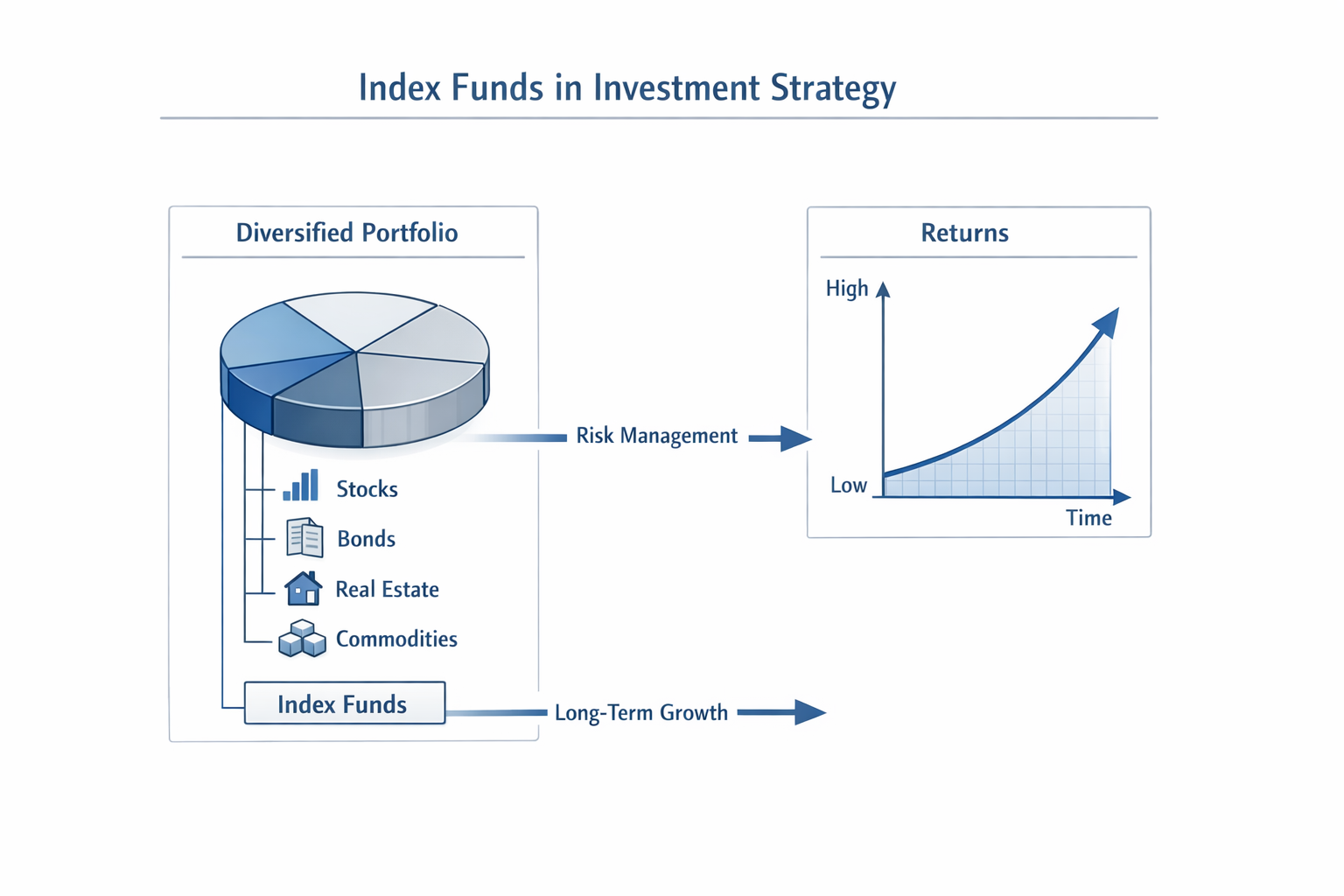
Investing in an index fund is straightforward, but the process works best when approached with a framework rather than rushing in. Most people can open an account and buy shares in less than an hour, but choosing the right fund and account type for your situation takes a bit more thought.
The steps below walk through the practical decisions you'll face — from picking where to hold the investment to understanding what you're actually buying.
Decide Where to Hold the Investment
Index funds can live in taxable brokerage accounts or tax-advantaged retirement accounts like IRAs, 401(k)s, and other employer plans. The account type you choose affects how your investment grows and when you pay taxes on it.
For retirement savings, tax-advantaged accounts typically make the most sense. Traditional IRAs and 401(k)s let contributions grow tax-deferred, meaning you don't pay taxes on gains until you withdraw the money. Roth IRAs and Roth 401(k)s work the opposite way — you pay taxes upfront, but qualified withdrawals come out tax-free. If your employer offers a 401(k) match, that's usually the starting point; free money beats almost any other consideration.
For goals outside retirement — a house down payment, a taxable investment account for flexibility, or simply building wealth without the restrictions of a retirement plan — a standard brokerage account works. You'll pay capital gains taxes on any profits when you sell, but you can access the money anytime without penalties.
Step 1
Choose your account type
Match the account to the goal. Retirement money goes in IRAs or 401(k)s when possible. Money you might need before age 59½ goes in a taxable brokerage account. If you're self-employed, a SEP IRA might be worth considering for higher contribution limits.
Pick a Brokerage or Fund Provider
Once you know what type of account you need, you'll open it with a brokerage firm or directly with a fund company. Most major brokerages — Fidelity, Vanguard, Charles Schwab, and others — offer low-cost or no-commission trading on index funds and ETFs. Some also offer proprietary index funds with expense ratios near zero.
The differences between providers matter less than they used to. Commission-free trading is now standard, and expense ratios have compressed across the industry. The real considerations: account minimums (some funds require $1,000 or more to start, though many ETFs have no minimum), ease of use, and whether the platform offers the specific index funds you want.
If your employer offers a 401(k), you're working within that plan's menu of options. You don't pick the brokerage — your employer already did. Your job is to identify which index funds are available in the plan and choose the ones that fit your strategy.
Step 2
Open the account
Complete the application online or by paper. You'll provide basic information — name, Social Security number, employment details, and beneficiary designations. For retirement accounts, you'll also indicate whether you want traditional (pre-tax) or Roth (after-tax) treatment.
Choose the Right Index Fund
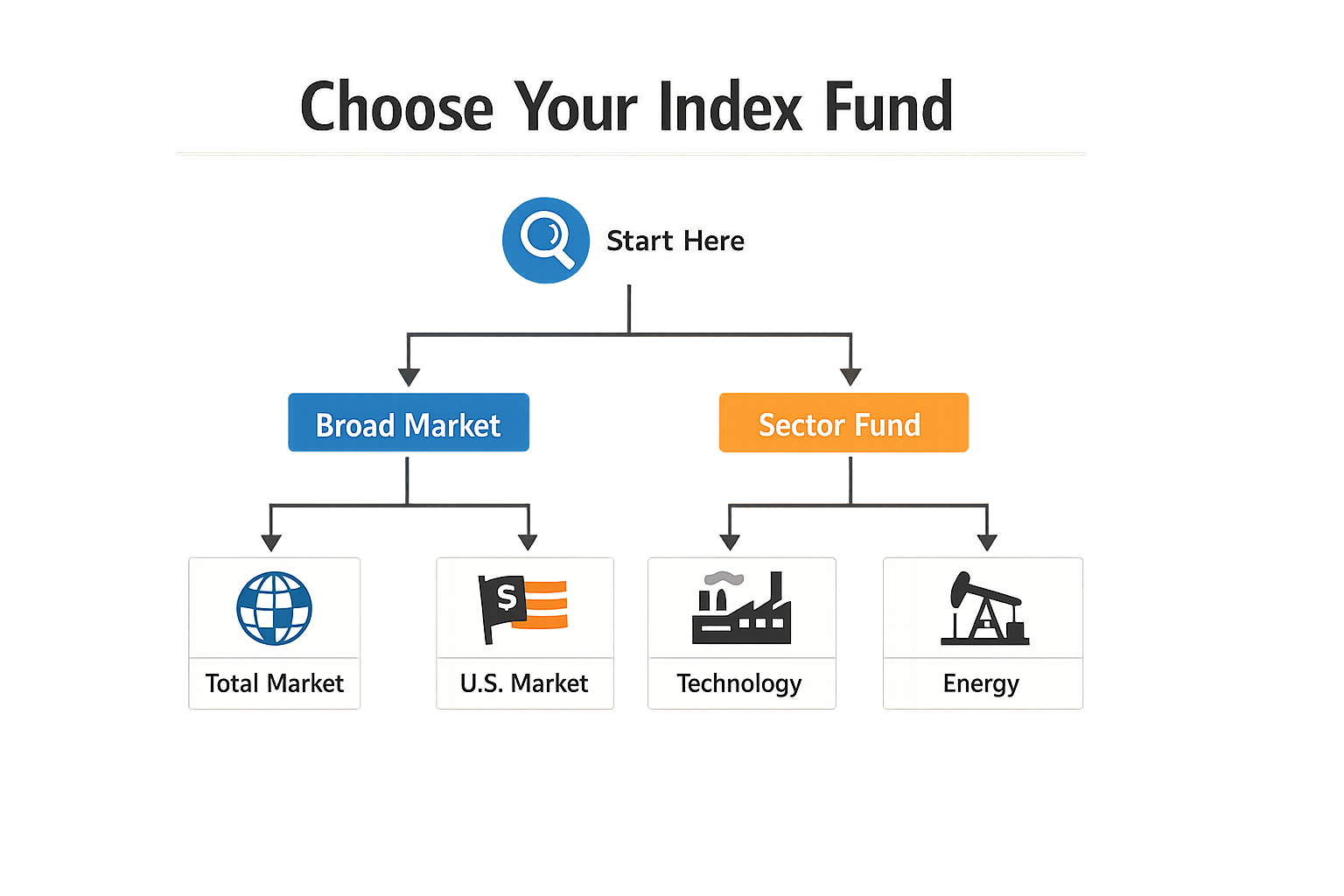
Not all index funds track the same benchmark, and the index a fund follows determines what you own. A fund tracking the S&P 500 holds large U.S. companies. A total stock market index fund includes small and mid-sized companies too. An international index fund holds non-U.S. stocks. A bond index fund holds fixed-income securities instead of stocks.
The expense ratio — the annual fee expressed as a percentage of assets — is one of the few costs you can control. Lower is better. Many broad-market index funds charge 0.10% or less; some are under 0.05%. Over decades, even small differences in fees compound into meaningful amounts.
Mutual funds and ETFs both offer index investing, and the practical differences are minor for most people. Mutual funds trade once per day at the closing price; ETFs trade throughout the day like stocks. Mutual funds sometimes have account minimums; ETFs typically don't, but you buy whole shares. For long-term buy-and-hold investors, either structure works.
Fund the Account and Place Your Order
Once the account is open, you'll transfer money into it. This can happen via bank transfer (ACH), wire, check, or rollover from another retirement account. Most transfers take one to three business days.
When the funds settle, you're ready to buy. For mutual funds, you typically enter a dollar amount — the system calculates how many shares that buys based on the day's closing price. For ETFs, you enter the number of shares (or a dollar amount if fractional shares are supported), and the trade executes at the current market price.
Step 3
Execute the purchase
Log in to your account, search for the fund by name or ticker symbol, and enter your order. Review the details — fund name, share price, total cost — before confirming. Once submitted, mutual fund orders execute at the end of the trading day; ETF orders typically fill within seconds during market hours.
Set Up Automatic Contributions (Optional but Recommended)
The math works like this: consistent contributions over time smooth out market volatility and build the position steadily. Most brokerages let you schedule automatic transfers from your bank account on a recurring basis — weekly, biweekly, or monthly.
Automatic investing removes the temptation to time the market. You buy shares when prices are high, when they're low, and everywhere in between. Over the long run, that averages out to your advantage. It also makes the process passive — once it's set up, the investment happens without requiring a decision every month.
For employer retirement plans, this happens through payroll deduction. You choose a percentage or dollar amount, and the contribution comes out of each paycheck before you see it. The fund purchases happen automatically within the plan.
The difference between investors who succeed and those who don't often comes down to whether they kept contributing through the boring middle years, not whether they picked the perfect entry point.
Monitor and Rebalance as Needed
Once you're invested, the work is mostly hands-off. Index funds don't require active management — that's the point. But your overall portfolio may need occasional rebalancing, especially if you hold multiple funds or asset classes.
Rebalancing means bringing your allocation back to your target percentages. If you wanted 70% stocks and 30% bonds, but a strong stock market pushed you to 80/20, you'd sell some stock funds and buy bond funds to return to 70/30. How often you rebalance depends on your situation — once or twice a year is common, though some people rebalance only when allocations drift beyond a set threshold.
Tax-advantaged accounts make rebalancing simpler because trades don't trigger capital gains taxes. In taxable accounts, rebalancing can create a tax bill, so some investors rebalance by directing new contributions to underweighted assets rather than selling.
The goal is getting in the right range, not hitting exact percentages to the decimal. Small drifts don't matter. Large ones — where one asset class dominates your portfolio in a way you didn't intend — do.
Best Practices for Investing in Index Funds
Most people who invest in index funds approach them the same way they approach a gym membership — with good intentions and no framework. The result is predictable: they buy at the wrong time, sell when they shouldn't, and wonder why the math didn't work out. Here's what that actually means in practical terms.
Match the Fund to Your Timeline
The first question isn't which index fund to buy. The real question is when you need the money. An S&P 500 index fund makes sense if you're 30 and saving for retirement. It makes less sense if you're 55 and planning to retire at 60. The framework here is straightforward: longer timelines allow you to ride out market volatility, shorter timelines require more stability.
Most people don't realize that the same index fund behaves differently depending on your circumstances. A 20% market drop is a buying opportunity when you have 30 years to recover. It's a problem when you have 3 years. Align your index fund selection with your actual withdrawal timeline, not with what sounds impressive at a dinner party.
Automate Your Contributions
The math works like this: consistent monthly investments smooth out market timing risk. When the market is high, your fixed dollar amount buys fewer shares. When it's low, you buy more. This is called dollar-cost averaging, and it's not as complicated as it sounds — it just means putting the same amount in every month regardless of what the headlines say.
Set up automatic transfers from your checking account to your investment account on the same day each month. Most brokerage platforms and retirement accounts make this straightforward. The framework removes emotion from the equation. You're not deciding whether to invest based on how the market feels that week. You're following a predetermined plan.
Step 1
Set your monthly amount
Determine how much you can consistently contribute each month without straining your budget. A sustainable $200 monthly contribution beats an aggressive $500 that you'll cancel after three months.
Step 2
Schedule the transfer
Set up automatic transfers for the day after your paycheck hits. This ensures the money moves before you have a chance to spend it elsewhere.
Step 3
Review annually
Once a year, adjust the contribution amount based on raises, changing expenses, or shifting financial goals. Don't touch it otherwise.
Rebalance on a Schedule
When you hold multiple index funds — say, a U.S. stock fund, an international fund, and a bond fund — their values drift over time. A strong year for U.S. stocks means that portion grows larger than you originally planned. Regular rebalancing brings your portfolio back to its target allocation.
The honest answer: most people either rebalance too often (racking up unnecessary trades) or never rebalance at all (letting their portfolio drift into riskier territory than they intended). A common misconception is that rebalancing requires constant attention. In practical terms, rebalancing once or twice a year is sufficient for most investors. Some retirement accounts offer automatic rebalancing — if yours does, turn it on and set the frequency to annual.
Keep Costs Low
Index funds are already low-cost compared to actively managed funds, but fees still matter. The difference between a 0.03% expense ratio and a 0.20% expense ratio compounds over decades. On a $100,000 investment over 30 years, that difference costs you tens of thousands of dollars in lost returns.
Look at the expense ratio before you buy. Most broad-market index funds from major providers charge less than 0.10%. If you're paying more than that, you're likely paying for something you don't need. When you're ready to take the next step in building a diversified portfolio, consider how SEP IRAs or other tax-advantaged accounts can amplify the cost benefits of low-fee index funds.
| Expense Ratio | Cost on $10,000/year | 30-Year Impact |
|---|---|---|
| 0.03% | $3 annually | Minimal |
| 0.10% | $10 annually | Low |
| 0.50% | $50 annually | Significant |
Ignore Short-Term Noise
The market will drop. It always does. Sometimes by 10%, sometimes by 30%, sometimes by more. Your job as an index fund investor is to do nothing when that happens — assuming your timeline and allocation are still appropriate. Most people panic and sell at the bottom, locking in losses they would have recovered from if they'd simply waited.
Here's what that actually means: if you're investing for retirement in 25 years, a market crash today is irrelevant to your outcome. If you're investing for a house down payment in 2 years, a market crash today is a serious problem. The framework is your timeline, not the headlines. Worth understanding: the investors who succeed with index funds are the ones who stick to the plan when everyone else is panicking.
Review Your Strategy Annually
Once a year, sit down and review your overall financial picture. Are you still on track for your goals? Has your risk tolerance changed? Do you need to adjust your contribution amount or your asset allocation? This isn't about reacting to market performance — it's about making sure your investment strategy still matches your life.
For informational and educational purposes, this annual review is a starting point. Depending on your circumstances, you may want to talk to a licensed financial professional who can help you evaluate whether your current index fund strategy aligns with your broader financial plan. Your specific situation — income, expenses, dependents, other investments — determines what adjustments make sense.
Common Mistakes to Avoid
Most people who lose money in index funds don't lose it because the market crashed — they lose it because they made predictable mistakes that had nothing to do with the index itself. The math of index investing is straightforward, but the behavior part trips up even experienced investors.
Here are the pitfalls worth understanding before you commit real money.
Chasing Performance After the Run Is Over
The biggest mistake is buying an index fund because it had a great year. By the time you notice a sector fund or international index at the top of the performance charts, the run is often ending. You're buying high, which is exactly backward.
Index funds track markets, and markets rotate. What worked last year frequently underperforms this year. The framework that protects you: decide on an asset allocation that fits your risk tolerance and timeline, then stick to it regardless of which index had the best recent returns.
Paying Too Much in Fees
Not all index funds tracking the same index charge the same fees. The difference between a 0.03% expense ratio and a 0.50% expense ratio looks small on paper, but over 30 years it compounds into tens of thousands of dollars on a mid-sized account.
Always compare expense ratios before buying. If two funds track the S&P 500, the one with the lower fee wins unless there's a specific structural reason (like tax efficiency in a taxable account) to pay more.
Selling During Market Drops
Index funds go down when the market goes down — that's the deal. The mistake is selling after the drop, locking in the loss, and then waiting on the sidelines while the market recovers without you.
The honest answer: if a 20% or 30% decline would cause you to sell, you're in the wrong allocation. Business succession planning requires similar long-term discipline — the framework is deciding in advance what you'll do when volatility hits, not reacting emotionally when it does.
Ignoring Tax Efficiency in Taxable Accounts
Index funds are generally tax-efficient, but some are better than others. Funds that trade frequently or hold dividend-heavy stocks generate more taxable events. If you're investing in a taxable brokerage account (not an IRA or 401(k)), those taxes eat into your returns every year.
The difference between holding a broad stock index fund and a high-turnover sector fund in a taxable account can cost you 1% or more annually in tax drag. In retirement accounts, it doesn't matter — but in taxable accounts, it's worth understanding which funds distribute the most capital gains.
Overcomplicating the Portfolio
Some investors buy six or eight index funds thinking they're diversifying, but they end up owning the same stocks multiple times in overlapping funds. A total stock market index already holds large-cap, mid-cap, and small-cap stocks. Adding a separate S&P 500 fund and a small-cap fund on top just creates redundancy and tracking headaches.
The goal is getting in the right range of diversification, not owning every possible index. For most people, a total stock market fund and a total bond market fund cover the essentials. Adding international exposure makes sense for some portfolios, but beyond that you're often just adding complexity without adding real diversification.
Timing the Market
Trying to jump in and out of index funds based on economic predictions or market forecasts is a losing strategy for most investors. The math works against you: you have to be right twice — once when you sell, and again when you buy back in. Miss the best 10 days in the market over a 20-year period and your returns drop by half.
Index investing works because you stay invested through the full cycle. The framework is time in the market, not timing the market.
The difference between a successful index investor and an unsuccessful one usually comes down to behavior, not fund selection.
Not Rebalancing
If you start with a 70/30 stock/bond allocation and stocks do well for five years, you might end up at 85/15 without realizing it. You're now taking more risk than you intended, and when the market drops, the loss will be bigger than you planned for.
Rebalancing once or twice a year — selling a bit of what's grown and buying what's lagged — keeps your risk level consistent. It also forces you to buy low and sell high in small increments, which is the opposite of what most emotional investors do.
Forgetting About Your Timeline
Index funds are long-term tools. If you need the money in two years — for a house down payment, a business investment, or a planned expense — putting it in a stock index fund is a mistake. The market could be down 20% exactly when you need to sell.
The framework: money you need within five years doesn't belong in stock index funds, no matter how confident you are in the market. Keep short-term money in cash or short-term bonds where the principal is stable.
Frequently Asked Questions about Index Funds
Are index funds only for beginners?
No. Index funds appear in portfolios across every experience level, from first-time savers to institutional endowments managing billions. The framework is straightforward, which makes it accessible to beginners, but the tax efficiency, low cost, and diversification appeal to experienced investors who've learned that complexity doesn't equal better returns. Most people don't realize that many professional money managers hold index funds in their personal accounts even while they run active strategies for clients.
Can I lose money in an index fund?
Yes. An index fund tracks a market benchmark, so when that benchmark declines, the fund declines with it. If the S&P 500 drops 20 percent, an S&P 500 index fund drops roughly 20 percent. The difference between an index fund and individual stocks is diversification — you're not exposed to a single company's bankruptcy risk — but you're still exposed to broad market volatility. The math works like this: lower concentration risk, not zero market risk.
How are index funds different from ETFs?
An index fund is a type of mutual fund or exchange-traded fund (ETF) that tracks a benchmark. The confusion comes from the structure, not the strategy. A mutual fund version of an index fund trades once per day at net asset value; an ETF version trades throughout the day like a stock. Both can track the same index with nearly identical holdings. The real question is whether you prefer intraday trading flexibility (ETF) or end-of-day pricing simplicity (mutual fund). For most long-term investors, the difference is minor.
Do index funds pay dividends?
Yes, when the underlying companies in the index pay dividends. An S&P 500 index fund collects dividends from the 500 companies it holds and distributes them to shareholders, typically quarterly. You can choose to reinvest those dividends automatically to buy more shares or take them as cash. The tax treatment depends on your account type — dividends in a taxable brokerage account are taxable in the year received; dividends in an IRA or 401(k) grow tax-deferred.
How much should I invest in index funds?
That depends on your circumstances, time horizon, and risk tolerance. A common starting framework for retirement savers is a stock-bond allocation based on age — subtract your age from 110 or 120 to estimate the percentage in stock index funds, with the remainder in bond index funds. A 35-year-old might hold 75–85 percent in stock index funds; a 65-year-old might hold 45–55 percent. This is a starting point, not a rule. Talk to a licensed financial professional about your specific situation before making allocation decisions.
Are index funds good for retirement accounts?
Yes. Index funds fit naturally into tax-advantaged retirement accounts like 401(k)s and IRAs because they generate fewer taxable events than actively managed funds. Lower turnover means fewer capital gains distributions, which matters most in taxable accounts but simplifies record-keeping in retirement accounts too. Many employer 401(k) plans now offer index fund options as core menu choices, and self-directed IRA holders can access thousands of index funds across equity, bond, and international categories. For more on retirement account structures, see What Is a SEP IRA? A Guide for Self-Employed Workers.
What happens to index funds during a market crash?
They fall with the market. An index fund doesn't have a manager who can move to cash or shift sectors to avoid a downturn — it holds the index components in fixed proportions, so it experiences the full decline. The flip side: it also captures the full recovery. Historically, markets have recovered from crashes, but the timeline varies. The honest answer is that index funds are designed for long-term holding periods, not short-term crisis management. If you need the money within a few years, a stock index fund carries meaningful risk.
Can I buy index funds without a brokerage account?
Most of the time, no. Index funds are typically purchased through a brokerage account, a retirement plan, or directly from a fund company's platform. Some employers offer index funds in their 401(k) menus, which you access through the plan's recordkeeper, not a personal brokerage. If you want to buy index funds outside an employer plan, you'll need to open an account with a brokerage or fund company. Many platforms have eliminated account minimums and commissions, so the barrier to entry is lower than it used to be.
Do index funds ever close to new investors?
Rarely, and almost never for broad-market index funds. Actively managed funds sometimes close when they grow too large to execute their strategy, but index funds don't have that constraint — they simply buy more of the same holdings in the same proportions. A few niche index funds tracking small or illiquid markets might limit inflows, but the major equity and bond index funds remain open. Capacity isn't the concern with index funds; the concern is whether the index itself still represents the market segment you want to own.
Conclusion
Index funds offer a straightforward framework for building long-term wealth without requiring you to pick individual stocks or time the market. The math is simple: low costs, broad diversification, and consistent market exposure tend to compound favorably over decades. Most people don't need exotic strategies or constant portfolio adjustments — they need a plan they can stick with through market cycles.
The honest answer is that index funds won't make you rich overnight, and they won't protect you from short-term volatility. What they do offer is a proven method for capturing market returns while keeping expenses and behavioral mistakes to a minimum. When you're ready to take the next step, talk to a licensed financial professional who can help you determine how index funds fit into your overall financial picture — including retirement accounts, estate planning, and tax strategy.
For informational and educational purposes, this article provides a starting point. Your specific situation — risk tolerance, time horizon, tax circumstances, and other financial goals — determines the right allocation and implementation. The framework works when you understand what you own, why you own it, and how it supports the outcomes that matter to you.
If you're building a retirement strategy or evaluating investment options for your business, consider exploring what is a SEP IRA to see how tax-advantaged accounts can complement your index fund holdings. The goal is getting in the right range for your circumstances, not chasing perfection.