
Understanding Estate Planning: A Vital Step for Everyone
Most people don't lie awake wondering about estate planning. They lie awake wondering what happens to their family if they're not around to make decisions. Estate planning is the framework that answers that question.
Here's what that actually means: estate planning is the process of deciding who gets your assets when you die, who makes medical decisions if you can't, and who handles your financial affairs if you're incapacitated. The framework includes legal documents like wills, trusts, and healthcare directives, plus beneficiary designations on accounts like retirement plans and life insurance policies.
The common misconception is that estate planning is only for wealthy people or retirees. In practical terms, if you own anything — a car, a bank account, a retirement plan through work — or if you have people who depend on you, you need basic estate planning. A 30-year-old with a 401(k) and a spouse needs a plan just as much as a 65-year-old with a paid-off house.
Without estate planning, state law steps in and makes those decisions for you. That means a probate court determines who gets your assets, how long the process takes, and what it costs. For families, that often means months of legal proceedings, unexpected expenses, and decisions that don't match what you would have wanted. The honest answer is that most people don't realize how much control they're giving up by not having a plan in place.
This guide walks through estate planning basics — what it is, why it matters at every age, and how to start. The goal is getting in the right range for your circumstances, not creating a perfect plan on day one. When you're ready to take the next step, talk to a licensed estate planning attorney about your specific situation.
Learn what is estate planning and why it's essential for everyone, regardless of age. This complete guide covers key concepts and practical steps.
What Is Estate Planning?
Estate planning is the process of deciding who gets your assets when you die and who makes decisions if you can't. The framework includes legal documents, beneficiary designations, and strategies to transfer what you own according to your wishes — not a probate court's default rules.
Most people think estate planning is only for the wealthy. The real question is whether you want control over what happens to your money, property, and dependents. If the answer is yes, you need a plan.
The Core Components of Estate Planning Basics
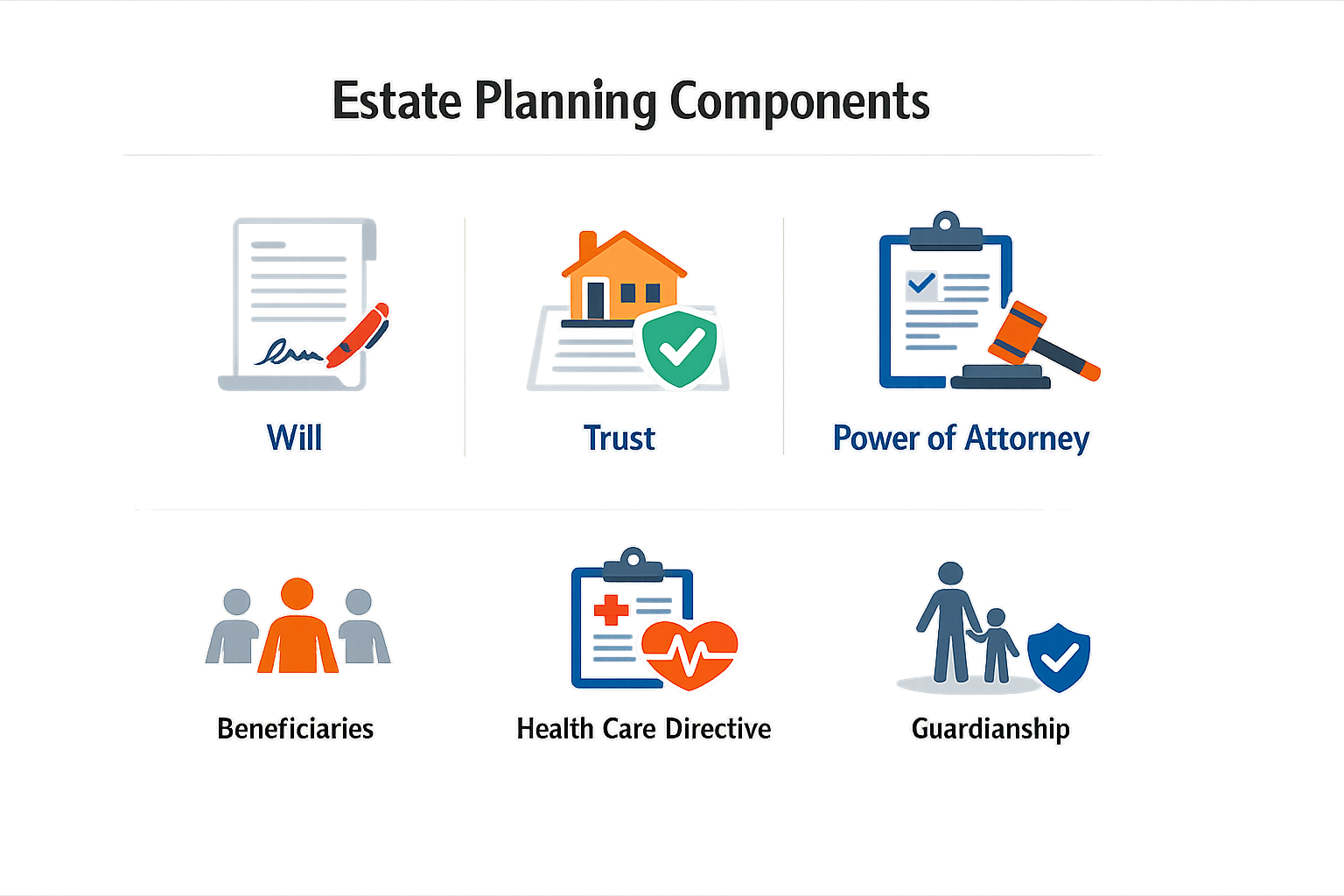
Estate planning combines several legal tools that work together. A will directs asset distribution and names guardians for minor children. Trusts can manage property during your lifetime and after death, sometimes avoiding probate entirely. Beneficiary designations on retirement accounts and life insurance policies transfer those assets directly, outside the will.
Power of attorney documents name someone to handle financial decisions if you're incapacitated. Healthcare directives specify medical treatment preferences and appoint someone to make healthcare choices when you can't. These documents answer the practical question: who steps in when you can't act for yourself?
Why the Framework Matters
Without estate planning documents, state intestacy laws determine who inherits your assets. Those laws follow a rigid formula based on family relationships — they don't account for your actual intentions or family dynamics. The probate process that follows can take months and consume a percentage of the estate in court costs and legal fees.
Beneficiary designations on financial accounts override what's written in a will. If your 401(k) still lists an ex-spouse as beneficiary, that's who receives the money regardless of your will's instructions. Estate planning means making sure all these pieces align with your current situation.
Estate Planning and Tax Considerations
The federal estate tax marital deduction allows unlimited transfers to a surviving spouse without immediate tax consequences. Specialized trusts like Qualified Domestic Trusts (QDOTs) can qualify for this deduction when the surviving spouse isn't a U.S. citizen, though specific requirements apply.
For most families, the estate tax isn't the primary concern — the 2024 federal exemption covers estates up to $13.61 million per individual. The bigger issues are asset protection, avoiding probate delays, and ensuring the right people inherit in the right proportions. Tax strategy is one component, not the entire framework.
What Estate Planning Is Not
Estate planning isn't a one-time event you complete and forget. Life changes — marriages, divorces, births, deaths, moves to different states — all require document updates. A plan created at 30 needs revision by 50.
It's also not just about death. Powers of attorney and healthcare directives matter most when you're alive but unable to communicate. The goal is getting in the right range for your current situation, then adjusting as circumstances change.
Why Estate Planning Matters at Every Age
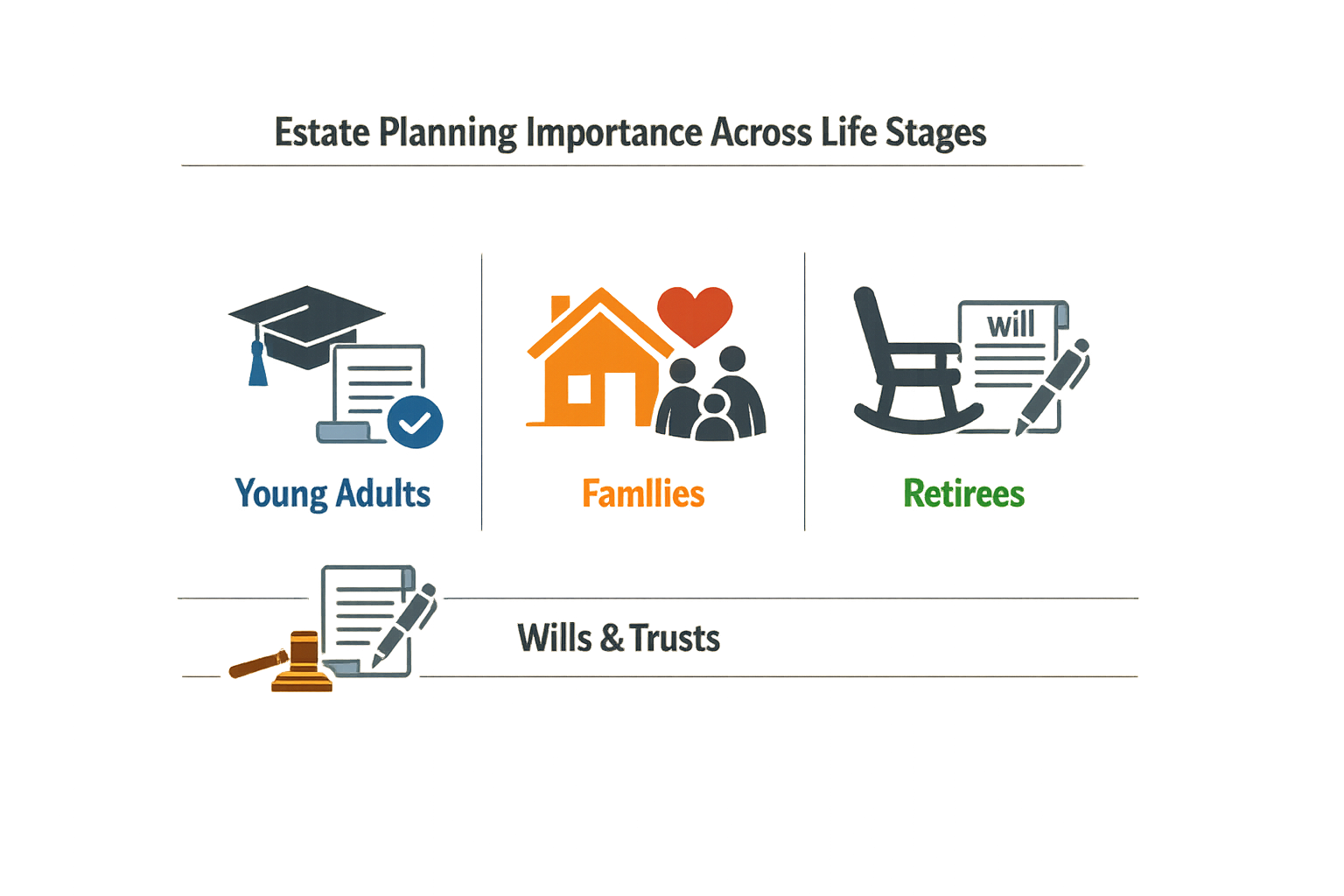
Most people assume estate planning is something they'll worry about when they're older. The reality: waiting creates the exact problems estate planning is designed to prevent. Whether you're 25 or 65, married or single, wealthy or just starting out, having a plan in place means your wishes get honored instead of being decided by a probate court.
The framework isn't about how much you own. It's about who makes decisions when you can't, where your assets go, and how your family avoids unnecessary legal complications. Those questions don't wait for retirement.
Estate Planning in Your 20s and 30s
If you have a job, a bank account, or anyone who depends on you, you have something to plan for. Young adults often overlook basic documents like a will or healthcare directive, assuming they have time. Here's what that actually means in practical terms: if something happens, the state decides who gets your assets and who makes medical decisions for you.
Beneficiary designations on retirement accounts and life insurance policies are estate planning tools too. Naming someone takes five minutes and ensures those assets transfer directly without probate. For parents with young children, a will is the only way to name a guardian — without one, a court decides who raises your kids.
Estate Planning in Your 40s and 50s
This is when most people accumulate real assets: a home, retirement accounts, maybe a business or investment properties. The math changes. Without a plan, your family faces probate fees, potential estate taxes, and months of court proceedings before they can access anything.
Trusts become worth understanding at this stage. A revocable living trust lets you transfer assets outside of probate, which means faster distribution and more privacy. If you own property in multiple states, a trust can save your heirs from navigating probate in each jurisdiction.
Updating beneficiary designations matters more now too. Divorce, remarriage, new children — life changes that your estate plan needs to reflect. Outdated designations override what's in your will, so a periodic review keeps everything aligned.
Estate Planning in Retirement
Retirement shifts the focus from accumulation to distribution. The goal is getting assets to heirs efficiently while minimizing tax impact. Required minimum distributions from retirement accounts, Social Security timing, and healthcare costs all factor into how you structure transfers.
For many retirees, healthcare directives and powers of attorney become the most important documents. These ensure someone you trust can make financial and medical decisions if you're incapacitated. Without them, your family may need a court-appointed conservator — an expensive and public process.
The Common Thread Across All Ages
Regardless of where you are in life, estate planning basics accomplish the same thing: they give you control. Control over who inherits, who decides, and how the process unfolds. The alternative is letting state law and probate courts make those choices for you.
The honest answer: most people don't realize how quickly a lack of planning becomes a burden on the people they care about. Legal fees, family disputes, frozen assets — these are predictable outcomes when there's no framework in place. A basic estate plan prevents them.
How to Start Your Estate Planning Journey
Most people know they need an estate plan the same way they know they need to change the oil in their car — it's important, but the starting point isn't obvious. The good news: you don't need to tackle everything at once. Estate planning is a process, not a single transaction, and the first steps are more straightforward than most people expect.
Here's the framework for getting started, broken into manageable pieces.
Step 1: Take Inventory of What You Own
Before you can plan how to distribute assets, you need to know what you have. Make a list that includes:
- Bank accounts, retirement accounts, and investment accounts
- Real estate (primary residence, rental properties, land)
- Life insurance policies and their beneficiaries
- Business interests or partnership stakes
- Personal property with significant value (vehicles, jewelry, collections)
- Digital assets (online accounts, cryptocurrency, intellectual property)
You don't need exact valuations at this stage — the goal is getting everything visible in one place. Most people discover they own more than they thought once they write it down.
Step 1
Document your assets
Create a simple spreadsheet or document listing each asset, its approximate value, and where the paperwork lives. Include account numbers for financial assets and the location of titles or deeds for property. This becomes your reference point for every decision that follows.
Step 2: Identify Your People
Estate planning basics require you to name specific individuals for specific roles. Think through:
- Beneficiaries: Who receives your assets?
- Guardians: If you have minor children, who raises them if you can't?
- Executor: Who manages the distribution process after you're gone?
- Healthcare proxy: Who makes medical decisions if you're incapacitated?
- Financial power of attorney: Who handles financial matters if you can't?
These don't all have to be the same person. In fact, the person who's great with kids might not be the right choice to manage a trust. Choose based on the specific responsibility.
Step 3: Determine Which Documents You Need
The specific documents depend on your situation, but most people need some combination of:
- Will: Directs asset distribution and names guardians for minor children
- Revocable living trust: Holds assets to avoid probate (optional but common)
- Durable power of attorney: Authorizes someone to handle financial matters
- Healthcare power of attorney: Authorizes medical decisions
- Living will or advance directive: States your wishes for end-of-life care
You might also need beneficiary designation forms for retirement accounts and life insurance. These override what's in your will, so they're worth reviewing even if you set them up years ago.
Step 4: Decide Whether to Work with a Professional
For straightforward situations — single individuals with minimal assets, or married couples with everything titled jointly and clear beneficiaries — online tools and templates might be sufficient. For anything more complex, talk to a licensed estate planning attorney.
Seek professional help if:
- You own a business or hold partnership interests
- You have children from multiple marriages
- You own property in more than one state
- Your estate might exceed federal or state estate tax thresholds
- You have a child with special needs who receives government benefits
- You want to create a trust structure
The cost of getting it right the first time is almost always less than the cost of fixing mistakes later. An attorney can also ensure your documents comply with state law — requirements vary, and a will that's valid in one state might not hold up in another.
Professional guidance helps you navigate the complexities involved in estate planning, especially when retirement accounts and tax implications intersect.
Step 5: Create or Update Beneficiary Designations
Beneficiary forms control who receives your retirement accounts, life insurance proceeds, and payable-on-death bank accounts — regardless of what your will says. Pull out the paperwork for:
- 401(k) and IRA accounts
- Life insurance policies
- Annuities
- Bank accounts with transfer-on-death provisions
Make sure the names match your current wishes. If you got divorced, remarried, or had children since you last updated these forms, they're probably wrong.
Step 6: Organize and Store Your Documents
Once you've created your estate planning documents, put them somewhere your executor or family can find them. Options include:
- A fireproof safe at home (give a trusted person the combination)
- A safe deposit box (make sure your executor has access)
- With your attorney (if they offer storage)
- Digital copies in a secure cloud service
Tell your executor and key family members where everything is. The best estate plan in the world doesn't help if no one can find it when it matters.
Step 7: Set a Review Schedule
Estate planning isn't one-and-done. Review your plan:
- Every 3–5 years as a baseline
- After major life events (marriage, divorce, birth, death, large inheritance)
- When you move to a new state
- When tax laws change significantly
A quick review takes an hour. Updating a plan that's ten years out of date takes considerably longer and costs more.
The starting point for estate planning basics is simpler than most people expect: list what you own, choose who you trust, and get the core documents in place. Everything else builds from there.
Best Practices for Effective Estate Planning
An estate plan isn't a one-and-done document you file away and forget. The framework works only when it reflects your current life, your actual assets, and the people you want to protect. Most people set up their plan and then let it drift out of sync with reality — marriages happen, kids are born, property values shift, and the documents never catch up. Here's what keeps an estate plan functional over time.
Review and Update Regularly
Life changes faster than paperwork. A beneficiary designation you filled out ten years ago might name an ex-spouse, or a guardian appointment might reference someone who's no longer in the picture. The practical rule: review your estate plan every three to five years, and immediately after major life events — marriage, divorce, the birth of a child, a significant change in assets, or a move to a new state. Estate laws vary by state, and a plan that worked in one jurisdiction might not hold up in another.
When you update, focus on three areas: beneficiary designations on retirement accounts and insurance policies, guardianship appointments if you have minor children, and the accuracy of your asset inventory. These are the pieces that drift most often.
Coordinate Beneficiary Designations with Your Overall Plan
Beneficiary designations on retirement accounts, life insurance policies, and payable-on-death accounts override what's in your will. Most people don't realize this until it's too late. If your will says everything goes to your spouse, but your 401(k) still lists your parents from when you opened the account twenty years ago, your parents get the 401(k) — the will doesn't control it.
The math works like this: beneficiary designations are contracts between you and the financial institution. They're processed independently of probate, which means they move faster but also means they're invisible to your will. Check every account that allows a beneficiary designation — IRAs, 401(k)s, life insurance, annuities, and bank accounts with transfer-on-death features. Make sure the names match your current intentions.
The cheapest estate plan in the world doesn't work if your beneficiary forms say something different than your will.
If you're using a trust as part of your estate plan, consider whether certain accounts should name the trust as beneficiary. This is common for life insurance policies when minor children are involved, or when you want assets managed under the trust's terms rather than distributed outright. Talk to a licensed financial professional about which structure makes sense for your specific situation.
Work with Qualified Professionals
Estate planning sits at the intersection of law, taxes, and financial products. A will you download online might be legally valid, but it won't catch the details that matter — like how your state treats community property, or whether your retirement account beneficiaries will trigger unnecessary taxes, or whether your business succession plan actually works under your operating agreement.
The framework: start with an estate planning attorney who practices in your state. They draft the documents — wills, trusts, powers of attorney, healthcare directives — and make sure they're enforceable where you live. If your estate includes significant retirement assets, business interests, or complex family situations, bring in a tax professional and a financial advisor who understands estate planning concepts. These aren't three separate plans; they're three perspectives on the same plan.
Most people don't need the most expensive attorney in town, but they do need someone who specializes in estate planning rather than a general practitioner. The cost of getting it right the first time is a fraction of the cost of fixing it later — or the cost your family pays when the plan doesn't work.
Document Everything and Communicate with Your Family
Your estate plan only works if the people who need to execute it know it exists and can find it. That sounds obvious, but it's one of the most common breakdowns. Your executor needs to know where the will is stored, who your attorney is, and how to access your accounts. Your healthcare proxy needs to know they've been appointed and what your wishes are.
The practical steps: keep original documents in a fireproof safe or with your attorney. Give your executor and a trusted family member a list of where everything is — bank accounts, insurance policies, retirement accounts, the safe deposit box key, login credentials for online accounts (stored securely), and contact information for your attorney and financial professionals. Update this list when things change.
Have a conversation with the people you've named in your plan. It doesn't have to be a formal family meeting, but your executor should know they're your executor, your guardian should know they're your guardian, and your healthcare proxy should understand your wishes. These aren't roles people can step into cold; they need context.
The goal is getting in the right range — not perfection, but a plan that's current, coordinated, and accessible when it's needed. Most estate planning failures aren't failures of strategy; they're failures of maintenance. When you treat your estate plan like a living framework rather than a finished product, it works the way it's supposed to.
Common Mistakes in Estate Planning to Avoid
Most people don't set out to create a flawed estate plan. They make decisions that seem reasonable at the time, then never revisit them. The result is a plan that doesn't reflect their current life, their actual assets, or the people they want to protect.
Here's what that actually means: the difference between an effective estate plan and one that creates problems for your family often comes down to a handful of avoidable mistakes. Understanding these pitfalls helps you build a framework that actually works when it matters.
Failing to Update Beneficiary Designations
Beneficiary designations on retirement accounts, life insurance policies, and other financial accounts override what's written in your will. A common misconception is that your will controls everything — it doesn't.
If you named your ex-spouse as the beneficiary on your 401(k) fifteen years ago and never changed it, that's where the money goes regardless of what your will says. The same applies if you've had children, gotten remarried, or experienced any major life change. Your beneficiary forms are legal contracts that supersede your other estate planning documents.
The framework here is straightforward: review beneficiary designations annually and after every major life event — marriage, divorce, birth, death, or significant financial change. Most people don't realize how often these designations become outdated simply because no one thinks to check them.
Overlooking the Surviving Spouse's Options
When estate planning involves a married couple, the surviving spouse has specific rights and strategic options that many people miss. For instance, a surviving spouse can disclaim (legally refuse) an inheritance, allowing assets to pass to contingent beneficiaries without the spouse directing where they go.
This strategy can be useful for tax planning or when the surviving spouse has sufficient assets and wants to preserve wealth for children or other heirs. The key is understanding that disclaimers must be executed properly and within specific timeframes to be valid.
Another common oversight: failing to coordinate retirement account beneficiary designations with overall estate planning goals. The rules governing how a surviving spouse must take distributions differ from those for other beneficiaries, and getting this wrong can trigger unnecessary taxes or penalties.
Not Planning for Incapacity
Estate planning isn't just about what happens after you die. It's also about who makes decisions if you're alive but unable to make them yourself.
Many people focus exclusively on wills and beneficiary designations while ignoring powers of attorney and healthcare directives. Without these documents, your family may need to go to court to get authority to manage your finances or make medical decisions on your behalf — a process that's expensive, time-consuming, and stressful during an already difficult situation.
The honest answer: most families need both a durable power of attorney for financial matters and a healthcare power of attorney (or healthcare proxy). These documents should name specific individuals you trust and provide clear guidance about your preferences.
Assuming "Simple" Estates Don't Need Professional Help
The myth that estate planning is only for wealthy people creates real problems. Even modest estates can face complications — minor children who need guardians, blended family dynamics, beneficiaries with special needs, or assets in multiple states.
Doing it yourself with online forms might seem cost-effective, but the math works like this: a $500 consultation with an estate planning attorney now can prevent $50,000 in probate costs, family disputes, or tax problems later. For informational and educational purposes, understanding the trade-offs matters more than finding the cheapest option.
Forgetting to Fund a Trust
Creating a trust is only half the job. The trust doesn't control any assets until you actually transfer ownership of those assets into the trust — a process called "funding the trust."
People pay an attorney to draft a trust, sign the documents, then leave their house, bank accounts, and investments titled in their personal name. When they die, those assets go through probate anyway because the trust was never funded. The trust exists, but it's empty.
Worth understanding: funding a trust means changing titles and beneficiary designations to reflect the trust as the owner. This includes deeds for real estate, account registrations for investment and bank accounts, and potentially beneficiary designations on life insurance or retirement accounts (depending on your specific situation).
Ignoring Tax Implications
Estate and gift tax laws change, and what made sense under one set of rules may not work under another. More commonly, people create plans without understanding how income taxes, capital gains taxes, and estate taxes interact.
For example, leaving a highly appreciated asset to a charity in your will can provide a tax benefit, while leaving the same asset to an individual beneficiary might trigger a large capital gains tax bill when they sell it. The goal is getting in the right range of tax efficiency for your specific situation, not perfect optimization — but you need to consider taxes as part of the framework.
The cheapest estate plan is the one that doesn't create a tax bill your beneficiaries can't afford to pay.
Not Communicating the Plan
Your estate plan works best when the people involved know it exists and understand their roles. Naming your sister as executor without telling her, or creating a trust without explaining to your children why you structured it that way, sets up confusion and conflict.
You don't need to disclose every detail of your finances, but the people you've named in key roles — executor, trustee, guardian, power of attorney — should know they've been chosen and where to find your documents. A starting point: keep a list of your important documents, account numbers, and professional advisors in a secure location that your executor or spouse can access.
Treating Estate Planning as a One-Time Event
The real question is not whether your estate plan is perfect today, but whether it will still make sense in five years. Laws change, families change, assets change, and relationships change.
An estate plan created when your children were minors may need revision when they're adults. A plan that made sense when you were working may need adjustment in retirement. The framework is simple: review your estate plan every three to five years, and immediately after any major life change.
When you're ready to take the next step, schedule a review with a licensed financial professional or estate planning attorney who can evaluate whether your current plan still matches your goals and circumstances. Most people find that small adjustments along the way prevent major problems down the road.
Frequently Asked Questions About Estate Planning
Most people have the same questions about estate planning — and most of those questions come from the same source: uncertainty about where to start and what actually matters. Here's what that actually means in practical terms.
Do I need estate planning if I don't have a lot of assets?
Yes. Estate planning isn't just about how much you own — it's about who makes decisions when you can't. Even if your bank account is modest, someone needs legal authority to pay your bills, access your accounts, or make medical decisions if you're incapacitated. Without basic documents like a power of attorney and healthcare directive, your family faces court proceedings to get that authority. The process is expensive and public, regardless of your net worth.
The real question is what level of planning matches your situation. A young professional with no dependents needs different documents than a parent with minor children or a business owner with complex assets.
When should I start estate planning?
The honest answer: when you have anyone who depends on you financially or anyone you'd want making decisions on your behalf. For most people, that's when they get married, have children, buy a home, or start a business. Life insurance beneficiary designations and retirement account beneficiaries are estate planning decisions — if you've filled those out, you've already started.
What's the difference between a will and a trust?
A will is instructions for distributing your assets after death, executed through probate court. A trust is a legal entity that holds assets during your lifetime and distributes them according to your instructions — often avoiding probate entirely. Wills are simpler and less expensive to create; trusts offer more control and privacy but require ongoing management.
Most people don't realize that a will only controls assets titled in your name without beneficiary designations. Your life insurance, retirement accounts, and jointly-owned property pass outside the will based on beneficiary forms and title structure.
How much does estate planning cost?
A basic will typically costs $300 to $1,000 from an attorney, depending on your location and complexity. A comprehensive plan including a trust, power of attorney, and healthcare directives runs $1,500 to $3,000 or more. Online services offer simpler documents for $100 to $500, but they can't provide personalized advice for complex situations.
The framework: compare the cost of planning now against the cost of court proceedings, family disputes, and tax inefficiencies later. For most families, the math works in favor of professional guidance.
Do I need an attorney, or can I do it myself?
Depending on your circumstances, both approaches have a place. Simple situations — single person, modest assets, straightforward wishes — may work fine with quality online tools. Complex situations — blended families, business ownership, significant assets, minor children, special needs dependents — benefit from professional guidance.
The difference between a valid document and an effective plan often comes down to details that aren't obvious without experience. An attorney helps you avoid common mistakes and structures things to work with tax rules and state law.
What happens if I die without an estate plan?
Your state's intestacy laws decide who gets your assets and who manages the process. The distribution formula is rigid — it doesn't account for your relationships, your family's needs, or your wishes. For parents of minor children, the court appoints a guardian without your input. The process is public, often slow, and sometimes expensive.
A common misconception: "everything goes to my spouse automatically." In many states, intestacy laws split assets between your spouse and children, or between your spouse and your parents, creating complications no one intended.
How often should I update my estate plan?
Review your plan every three to five years, and update it after major life changes: marriage, divorce, births, deaths, significant asset changes, moves to a new state, or changes in your relationships with named individuals. Beneficiary designations on insurance and retirement accounts should be reviewed on the same schedule — they override your will, so outdated beneficiaries create problems even when your will is current.
Tax laws and state regulations change too. A plan that worked perfectly ten years ago may need adjustments to align with current rules.
Can I change my estate plan after I create it?
Yes. Wills and revocable trusts can be updated or replaced any time you're mentally competent. Most people update their plans multiple times over their lives as circumstances change. The goal is keeping the plan aligned with your current situation, not getting it perfect on the first try.
Irrevocable trusts are harder to change — that's part of their structure — but even those often have provisions for amendments under specific circumstances.
What documents do I actually need?
Most people need four core documents: a will (or trust), a financial power of attorney, a healthcare power of attorney, and a living will or advance directive. Together, these cover asset distribution, financial decisions during incapacity, medical decisions during incapacity, and end-of-life care preferences.
For parents, guardianship designations for minor children go in the will. For people with significant assets or privacy concerns, a revocable living trust often replaces the will as the primary distribution vehicle.
Conclusion: Your Estate Planning Checklist
Estate planning isn't something you finish once and forget. It's a framework you build, test against your current life, and update when circumstances change. Most people who put off estate planning aren't avoiding the work — they're avoiding the conversation about mortality. The honest answer: that conversation gets easier once you realize estate planning is about protecting the people you care about, not dwelling on worst-case scenarios.
Here's what that actually means in practical terms. You need a will that names guardians if you have minor children, a durable power of attorney so someone can handle financial decisions if you're incapacitated, and a healthcare directive that spells out your medical wishes. Beneficiary designations on retirement accounts and life insurance policies transfer assets outside probate, so they need to match your overall plan. Depending on your circumstances, a trust might make sense for privacy, probate avoidance, or specific distribution instructions.
The framework works when you treat it as a living document. A 30-year-old with a new baby has different priorities than a 55-year-old planning retirement or a 70-year-old managing a legacy. Estate planning adapts to those stages. The goal isn't perfection on day one; it's getting the core documents in place and refining them as your life evolves.
Most people don't realize how much peace of mind comes from knowing your affairs are in order. When you're ready to take the next step, understanding the fundamentals of estate planning gives you the foundation to have informed conversations with licensed professionals who can tailor a plan to your specific situation. Talk to an estate planning attorney, update those beneficiary forms, and put the framework in writing. Your family will thank you for it.
Related reading
401k Contribution Limits 2026: Maximize Your Savings
Backdoor Roth IRA Conversion: A Guide for High Earners
What is a Contingent Beneficiary? Meaning and Why You Need One