
Introduction
How to invest in the S&P 500 is straightforward: open a brokerage account, choose an index fund or ETF, and commit to regular contributions. The S&P 500 offers a starting point — a way to participate in the growth of America's largest companies without needing to become a stock analyst.
The S&P 500 is an index tracking 500 of the largest publicly traded U.S. companies. When you invest in the S&P 500, you're not buying a single stock. You're buying exposure to a cross-section of the American economy — technology, healthcare, finance, consumer goods, and more. The index itself is just a number, but you can invest in it through funds designed to mirror its performance.
Here's what that actually means in practical terms: instead of researching individual companies and building a portfolio stock by stock, you can buy a single fund that holds all 500 companies in proportion to their market size. One transaction gives you a diversified position across major sectors of the economy. For many investors, particularly those building retirement savings, this framework removes much of the guesswork from getting started.
The mechanics are straightforward. You open an account — either a taxable brokerage account or a tax-advantaged retirement account like an IRA or 401(k). You fund the account. You select an S&P 500 index fund or ETF. You invest. The complexity isn't in the steps themselves; it's in understanding which account type fits your situation and how much to invest relative to your other financial goals. If you're self-employed or run a small business, options like a SEP IRA can provide both retirement savings and tax advantages while investing in index funds.
This guide walks through the process step by step: understanding what you're investing in, choosing the right account structure, selecting a fund, and building a sustainable approach. The goal is getting in the right range for your circumstances, not achieving perfection on day one.
Understanding the Challenge of Investing
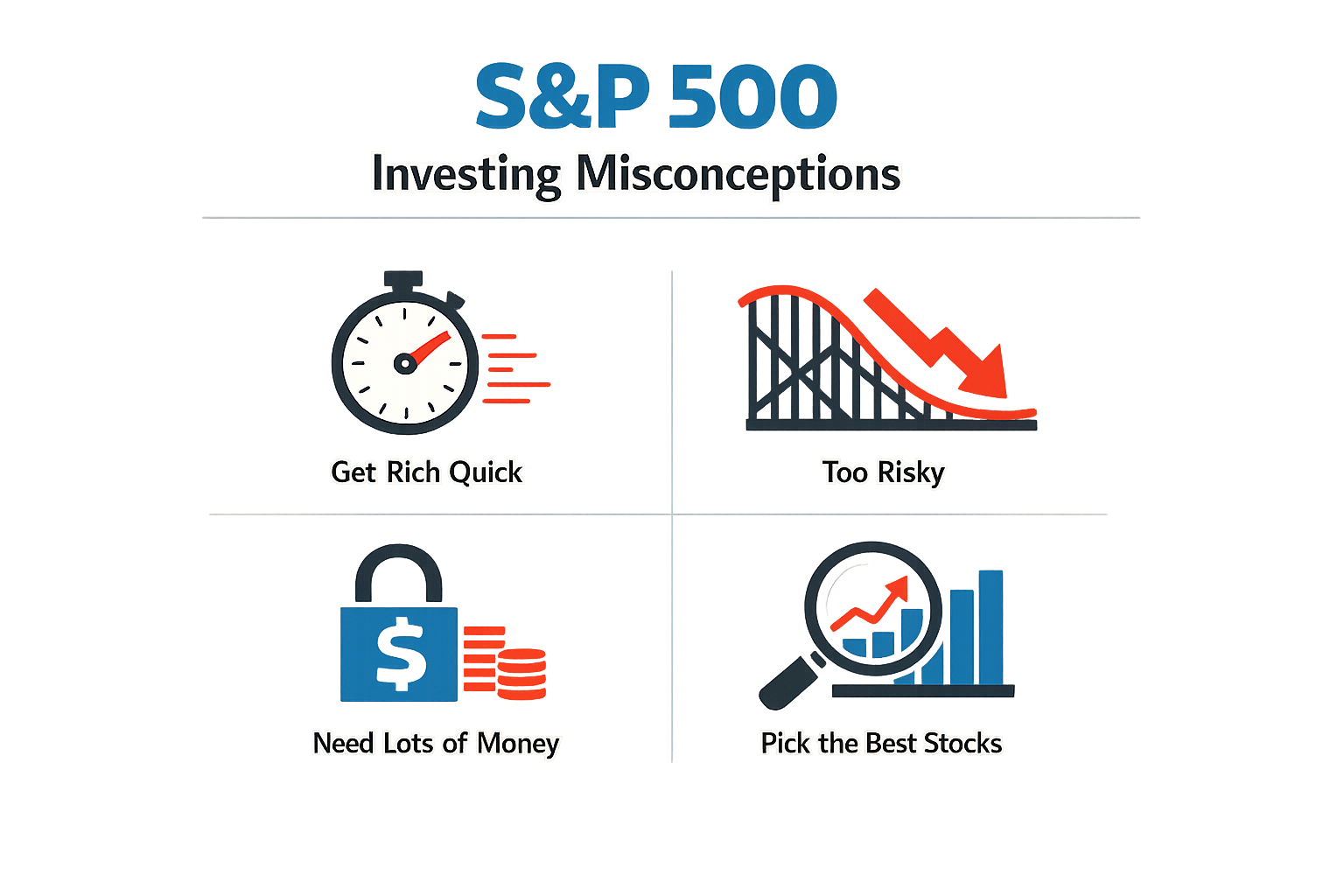
Most people approach investing the same way they approach learning a new language — with good intentions and no framework. The result is predictable: they stall at the first decision point, overwhelmed by choices they don't fully understand.
The S&P 500 is often called the simplest starting point for new investors, but that doesn't mean the path is obvious. The real question isn't whether the S&P 500 is a good investment — it's whether you can navigate the mechanics of actually buying it without tripping over account types, fund selection, or fee structures you didn't see coming.
How Do I Choose the Right Account Type?
The first obstacle isn't picking a fund — it's picking the right wrapper to hold it. Most beginners don't realize that where you invest matters as much as what you invest in. A taxable brokerage account, a traditional IRA, a Roth IRA, and a 401(k) all offer access to S&P 500 funds, but the tax treatment and withdrawal rules are completely different.
For example, catch-up contributions are additional contributions that individuals aged 50 and older can make to their retirement accounts to help boost their savings. If you're planning to invest through a 401(k) and you're in the right age bracket, understanding these limits can change your strategy. But if you don't know the difference between a traditional and Roth account in the first place, that optimization is meaningless.
The honest answer: most people pick an account based on what their employer offers or what a friend recommended, not because they evaluated the tax implications for their specific situation. That's not wrong — it's just not strategic.
What's the Difference Between S&P 500 Funds?
Once you've opened an account, the next challenge is choosing which S&P 500 fund to buy. Here's where it gets tricky: there are dozens of funds that track the same index, but they charge different fees and use slightly different methods.
Most beginners don't know to look for the expense ratio. They see "S&P 500 Index Fund" and assume they're all the same. They're not.
Should I Wait for the Right Time to Invest?
The third common challenge is deciding when to invest. The market fluctuates daily, and beginners often wait for the "right time" — which usually means waiting for a dip that either never comes or arrives after they've already missed months of growth.
The math works like this: trying to time the market requires being right twice — when to get in and when to get out. Most professional investors can't do this consistently. For someone just learning what is a SEP IRA or how retirement accounts work, attempting to time entries is a distraction from the real goal: getting invested and staying invested.
The cheapest mistake is the one you avoid by starting with a framework instead of a guess.
How Do I Handle Market Volatility?
The S&P 500 doesn't move in a straight line. It drops 10% or more in some years, and beginners who haven't prepared for that reality often panic and sell at the worst possible time.
The framework that matters: volatility is the cost of admission, not a sign that something is broken. If you can't stomach seeing your account balance drop temporarily, you're not ready to invest in stocks — and that's worth knowing before you start, not after.
Step-by-Step Guide to Investing in the S&P 500
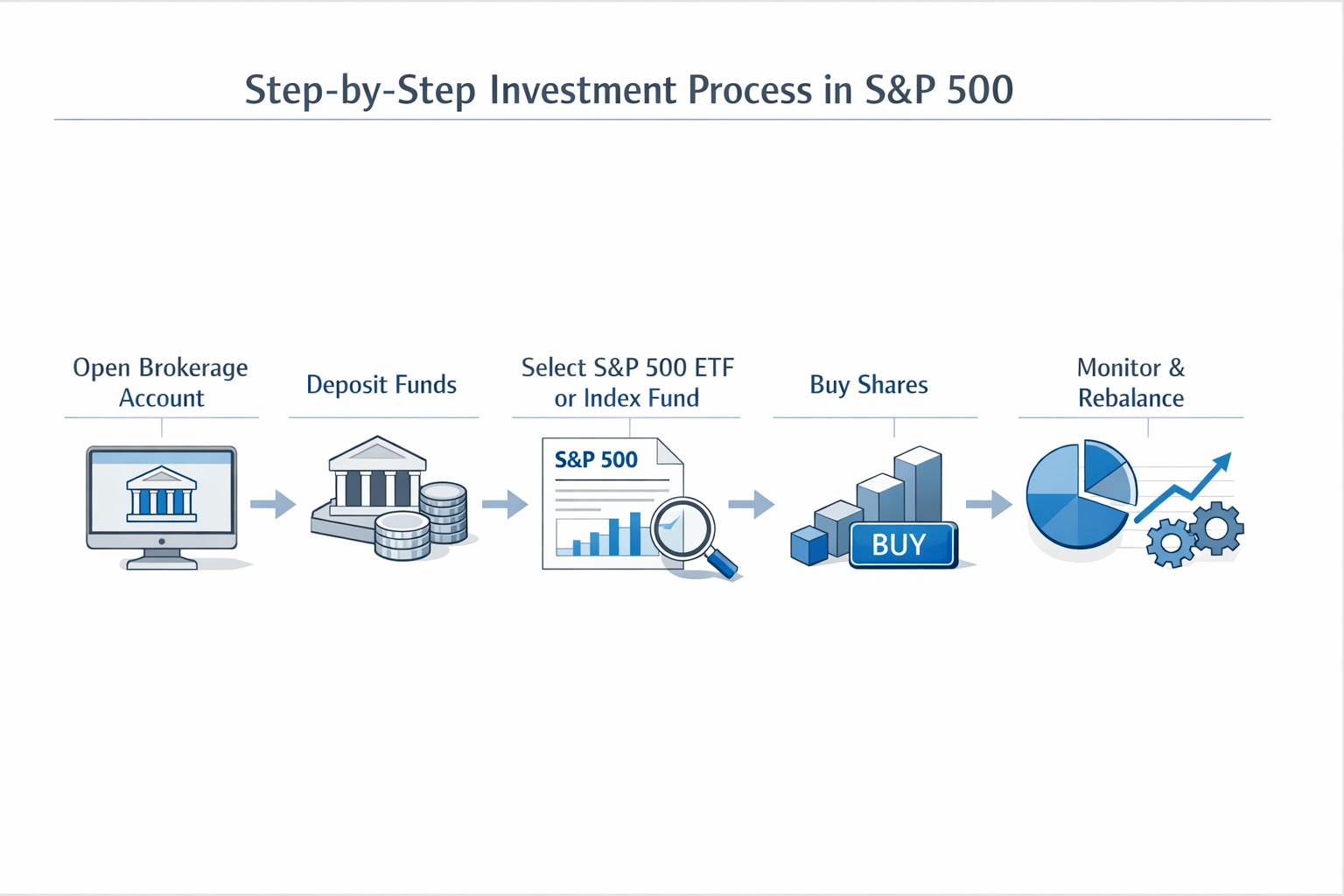
How to invest in the S&P 500 comes down to five concrete steps: choosing your account type, selecting a brokerage platform, picking a fund, funding your account, and establishing a contribution schedule. Most people overthink the process when what matters is getting the structure right and then staying consistent.
How to Invest in the S&P 500: Choose Your Account Type
The first decision is where the investment will live. The account type determines your tax treatment and contribution limits.
For most people, that means choosing between a workplace retirement plan and an individual retirement account. If your employer offers a 401(k) with matching contributions, that's typically the starting point — the match is immediate return on investment before the market does anything. For 2025, employees can contribute up to $23,500 through salary reduction, with an additional $7,500 catch-up contribution if you're 50 or older.
If you're self-employed or don't have access to a workplace plan, a SEP IRA or SIMPLE IRA might make sense depending on your business structure. A SEP IRA allows self-employed workers to contribute a percentage of their net self-employment income, giving you flexibility as income fluctuates. For small teams, a SIMPLE IRA offers a straightforward retirement plan with employer matching requirements.
For taxable accounts, there's no contribution limit and no early withdrawal penalty, but you'll pay taxes on dividends and capital gains each year. The trade-off is liquidity — you can access the money anytime without the restrictions that come with retirement accounts.
Select a Brokerage or Investment Platform
Once you know the account type, you need a place to open it. Most major brokerages offer low-cost S&P 500 index funds with no account minimums and no trading commissions.
The practical differences between platforms come down to user interface, research tools, and customer service. If you're opening a retirement account, confirm the brokerage supports the specific account type you need — not all platforms offer SEP IRAs or SIMPLE IRAs, for example.
For workplace retirement plans, your employer has already selected the provider. The investment options available in your 401(k) are the ones your plan administrator chose, which means you're working within that menu.
Step 1
Open and fund your account
Complete the brokerage application with basic personal and financial information. For retirement accounts, you'll need your Social Security number and employment details. Link your bank account for electronic transfers, then decide how much to contribute. Many platforms let you set up automatic recurring transfers so the investment happens without manual intervention each month.
Choose Your S&P 500 Fund
The S&P 500 is an index, not something you buy directly. You invest in it through index funds or exchange-traded funds (ETFs) that track the index.
The math works like this: when you buy shares of an S&P 500 index fund, you own a proportional slice of all 500 companies in the index, weighted by market capitalization. The fund's job is to mirror the index's performance as closely as possible.
The two main differences between funds are expense ratio and fund structure. The expense ratio is the annual fee expressed as a percentage of your investment — 0.03% is common for low-cost S&P 500 index funds, which means $3 per year for every $10,000 invested. Index funds trade once per day at the closing price; ETFs trade throughout the day like stocks.
For most long-term investors, the distinction between index fund and ETF doesn't matter much. Pick the one with the lowest expense ratio available in your account.
Step 2
Place your first investment
Search for S&P 500 index funds within your brokerage account. Compare expense ratios and choose the lowest-cost option. Enter the dollar amount you want to invest or the number of shares to purchase. Review the order details, then submit. The transaction typically settles within one to two business days.
Establish a Contribution Schedule
One-time investments are fine, but the real accumulation happens through regular contributions over time. This is dollar-cost averaging in practice — you buy more shares when prices are low and fewer when prices are high, which smooths out market volatility without requiring you to time anything.
For workplace retirement accounts, contributions come directly from your paycheck based on the percentage or dollar amount you elected. For individual accounts, set up automatic monthly transfers from your checking account on a date that aligns with your cash flow.
The goal is getting in the right range for your situation, not hitting a perfect number. A reasonable starting point is 10-15% of gross income for retirement savings, but that's a guideline, not a mandate. If you're starting later or have other financial priorities, adjust accordingly.
| Account Type | 2025 Contribution Limit | Tax Treatment | Early Withdrawal |
|---|---|---|---|
| 401(k) | $23,500 ($31,000 age 50+) | Pre-tax or Roth | 10% penalty before 59½ |
| Traditional IRA | $7,000 ($8,000 age 50+) | Pre-tax | 10% penalty before 59½ |
| Roth IRA | $7,000 ($8,000 age 50+) | After-tax | Contributions anytime, earnings penalized |
| Taxable brokerage | No limit | Pay annually on gains | No restrictions |
Monitor and Rebalance as Needed
Once the investment is in place, the framework is mostly hands-off. The S&P 500 rebalances itself automatically as companies grow or shrink in market value, and as the index committee adds or removes constituents.
Your job is to check in periodically — quarterly or annually is sufficient — to confirm contributions are processing and the allocation still matches your intent. If you're investing across multiple accounts or asset classes, rebalancing means selling portions of what's grown and buying what's lagged to maintain your target allocation.
For a simple S&P 500-only portfolio, there's not much to rebalance. The monitoring is more about making sure you're staying on track with contributions and that nothing unexpected happened with the account.
The honest answer is that the mechanics of how to invest in the S&P 500 aren't complicated. The difficulty is in the discipline — contributing consistently, not panicking when markets drop, and giving the framework time to work.
Tips and Tricks for Successful Investing
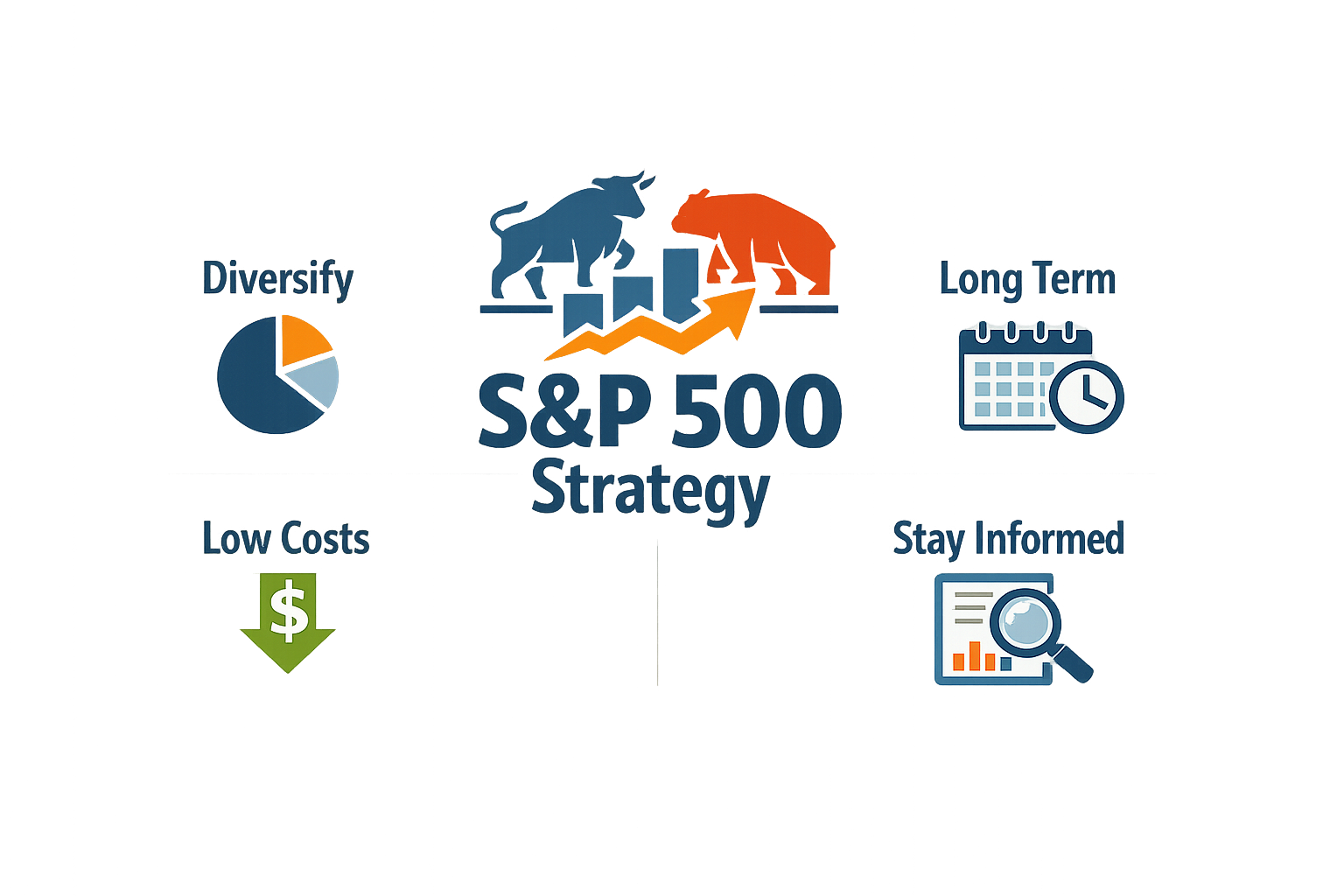
Most people who start investing in the S&P 500 do fine with the basics — pick a fund, contribute regularly, and wait. But a few straightforward adjustments can turn a decent long-term result into a better one, without adding complexity or risk.
Maximize Tax-Advantaged Accounts First
Before opening a taxable brokerage account, make sure you're using every dollar of available space in retirement accounts. For 2025, you can contribute up to $23,500 to a 401(k) plan. If you're self-employed, a SEP IRA or SIMPLE IRA may offer even more flexibility for building S&P 500 exposure inside a tax-deferred structure.
The math works like this: every dollar you invest in a tax-advantaged account grows without annual tax drag. Over decades, that compounds into a meaningful difference compared to taxable investing, especially for index funds that generate dividends and occasional capital gains distributions.
Automate Contributions and Stick to the Framework
The most reliable way to build wealth in the S&P 500 is to remove decisions from the process. Set up automatic transfers from your checking account to your investment account on the same day each month. The amount matters less than the consistency — whether it's $100 or $1,000, the goal is getting in the right range for your budget and staying there.
This approach eliminates the temptation to time the market. When the index drops 10%, your automatic contribution buys more shares. When it climbs 15%, you're already in. The framework works because it removes emotion from a process where emotion consistently loses to discipline.
The difference between investors who succeed and those who don't usually comes down to whether they kept contributing when it felt uncomfortable.
Understand Your Real Time Horizon
A common misconception is that retirement accounts are locked until age 59½, so younger investors avoid them. In practical terms, most people building wealth in their 30s and 40s have a 20- to 30-year horizon before they need the money — plenty of time to ride out market cycles and benefit from compounding. If you're investing for a goal less than five years away, the S&P 500 isn't the right vehicle. For longer horizons, it's one of the most straightforward options available.
When you're ready to take the next step in retirement planning, understanding the differences between account types can help you allocate contributions more effectively. What Is a SEP IRA? A Guide for Self-Employed Workers breaks down one of the most flexible options for business owners and freelancers.
Rebalance Only When Necessary
If you're investing exclusively in an S&P 500 index fund, there's nothing to rebalance — the fund does it automatically as companies enter and exit the index. If you hold other assets alongside your S&P 500 position, check your allocation once or twice a year. If stocks have grown to represent more than your target percentage, sell enough to bring things back in line. If they've shrunk, your next contributions can go toward stocks until you're back on track.
The honest answer: most people rebalance too often, triggering unnecessary taxes in taxable accounts and overthinking a process that works best when left alone. Once a year is plenty.
Keep Costs Low and Avoid Unnecessary Complexity
Expense ratios on S&P 500 index funds typically range from 0.03% to 0.20%. Over 30 years, the difference between a 0.03% fund and a 0.20% fund on a $100,000 investment is thousands of dollars. Check the expense ratio before you buy, and if your fund charges more than 0.10%, look for a cheaper alternative with the same index.
Avoid the temptation to layer on sector funds, leveraged ETFs, or actively managed strategies "to boost returns." The S&P 500 already gives you exposure to 500 of the largest U.S. companies across all major sectors. Adding complexity usually adds cost and tracking error without improving results. For business owners considering retirement plan options, comparing a SIMPLE IRA to other structures can clarify which vehicle keeps costs lowest while maximizing S&P 500 exposure.
Conclusion
How to invest in the S&P 500 doesn't require special expertise or a finance degree. The framework is straightforward: open a brokerage account, choose between an index fund or ETF, and commit to consistent contributions over time. Most people overthink the process when the real work is just getting started and staying disciplined.
The difference between investors who build wealth and those who don't usually comes down to two things: starting early and not stopping when the market dips. Time in the market beats timing the market, and the S&P 500's historical performance supports that approach. Dollar-cost averaging smooths out the volatility, and tax-advantaged accounts like IRAs and 401(k)s amplify your returns by letting your money compound without the annual tax drag.
When you're ready to take the next step, the mechanics are simple. Fund your account, select a low-cost S&P 500 index fund or ETF, and set up automatic investments if your platform allows it. The goal is getting in the right range for your risk tolerance and time horizon—most investors don't need to complicate it beyond that. For questions about how S&P 500 investing fits into broader retirement planning, resources like What Is a SEP IRA? A Guide for Self-Employed Workers can help clarify tax-advantaged options for different employment situations.
The honest answer: the best time to start was yesterday, but the second-best time is today. The framework you've learned here gives you everything you need to begin building a diversified portfolio anchored in one of the most reliable indexes in financial history. Your specific situation may call for adjustments, but the foundation remains the same—consistent investing in a low-cost S&P 500 fund is a starting point that has worked for millions of investors before you.
FAQ
How much money do I need to start investing in the S&P 500?Many brokerages now offer fractional shares, meaning you can start with as little as $1. Most S&P 500 index funds have no minimum investment requirement when you set up automatic contributions.
What is the average return of the S&P 500?Historically, the S&P 500 has averaged around 10% annual returns over the long term, though individual years vary widely. Past performance doesn't guarantee future results.
Should I invest in an S&P 500 index fund or ETF?Both track the same index. Index funds trade once daily at closing price; ETFs trade throughout the day. For long-term investors, the lowest expense ratio matters more than the structure.
Can I lose money investing in the S&P 500?Yes. The S&P 500 can and does decline during market downturns. Short-term volatility is normal; long-term investors focus on the overall upward trend over decades.
How often should I check my S&P 500 investment?Quarterly or annually is sufficient for most investors. Frequent checking often leads to emotional decisions during normal market fluctuations.
Related reading
Budgeting Basics: Starting Your First Budget - A Step-by-Step Guide